

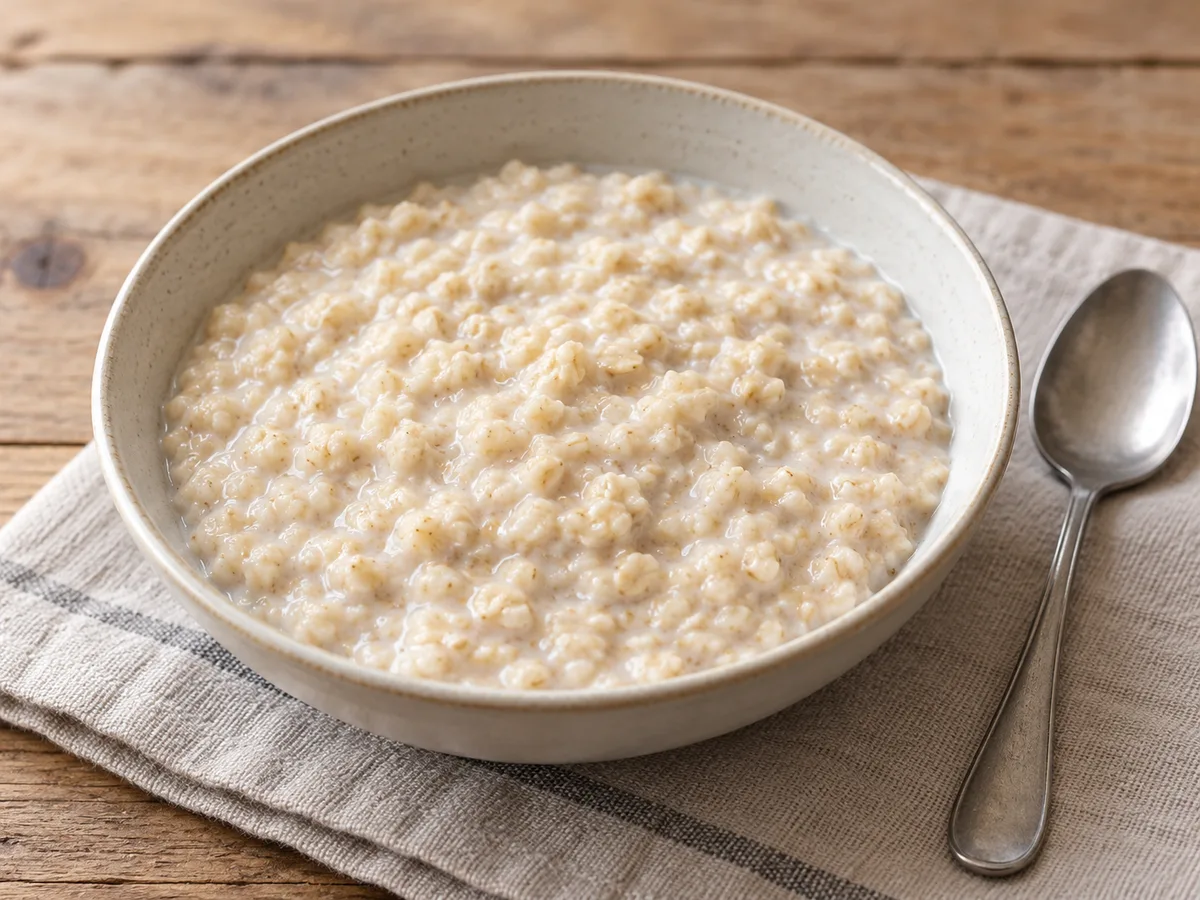
 AI-generated
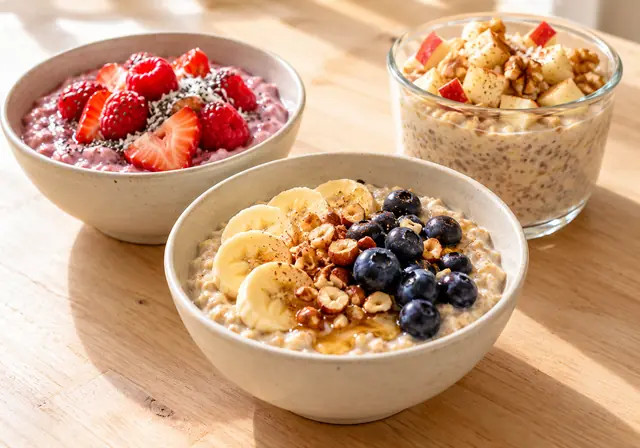 AI-generated
Porridge
Porridge is a warm, creamy breakfast bowl with a comforting reputation. Oats pair with milk or alternatives and welcome fruit and spice toppings.
From a simple bowl of oats to a colourful breakfast bowl, porridge makes a cosy start, especially on colder days.
Porridge brings a warm start to the day
Porridge is commonly understood as a soft cereal dish, often associated with oats and a warm breakfast. Its gentle texture makes it distinct from many crunchy breakfast foods, although individual versions vary from loose and creamy to quite thick. Some bowls have little added flavour, leaving room for fruit or spices, while others are more boldly flavoured. It is a familiar comfort food in several traditions, not a single universal preparation. Think about whether you want a soft and soothing breakfast, a grainier texture or a substantial bowl that will be the main meal of the morning.
Porridge and muesli are not the same thing
Muesli usually keeps individual grains and other ingredients more recognisable, often with a crisp or fresh contrast. Porridge is more closely associated with a cohesive, softened texture. Soaked grains can blur that distinction, which is why a precise description of the finished food is more helpful than a label alone. Some people enjoy both styles on different mornings. When comparing breakfast choices, the temperature, mouthfeel and accompanying fruit or other ingredients may matter more than whether the base grain is similar. These foods can share ingredients while delivering very different breakfast experiences.
Fruit, spices and other flavour directions
The flavour of a plain cereal porridge can be fairly mild. Fresh or dried fruit can contribute sweetness and acidity, cinnamon or other spices may give warmth, and nuts or seeds may add contrast. A richer topping produces a different impression from a light, fruit-led bowl. There is no need to combine every possible ingredient to make porridge interesting. A small number of well-matched flavours can be enough, particularly when the cereal itself already has a distinctive character. The choice is personal and can change with the season, the time available and the rest of breakfast.
Who might enjoy porridge?
People who prefer a warm, soft breakfast may find porridge especially appealing. Others prefer visible grains or a stronger bite, and those preferences are equally legitimate. When serving several people, consider texture and portion size as well as flavour. For allergies or intolerances, the actual grain, milk or milk alternatives, nuts and toppings must all be checked. Not every oat product is certified gluten-free, and lactose-free dairy is not the same as dairy-free food. A pleasant breakfast description should not be mistaken for a medical claim or a guarantee of individual tolerance.
Oat porridge is only one grain tradition
In many English-speaking settings, porridge brings oats to mind, but warm grain porridges exist in numerous food cultures. Other cereals and grains can create distinctly different textures, tastes and culinary associations. Their regional origins should be described accurately rather than treating them as variations on a single national breakfast. This also affects dietary choices: not all grains have the same allergen profile. The broad category encourages exploration, but the precise recipe remains important for understanding which grain is being used and what else accompanies it. A warm bowl is a starting point for comparison, not a complete definition.
Explore all recipes
ⓘ Ratings come exclusively from approved community contributions.