

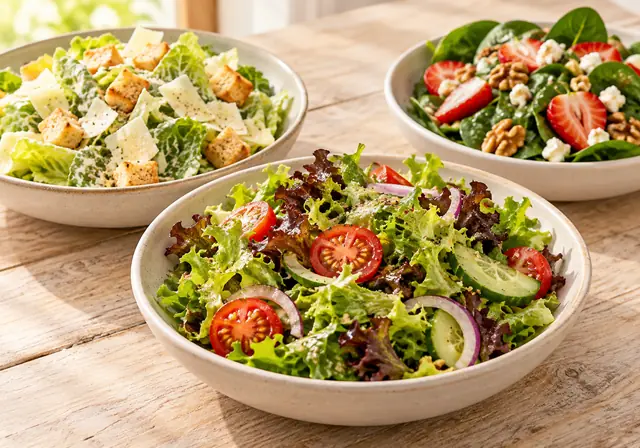
 Leafy salads
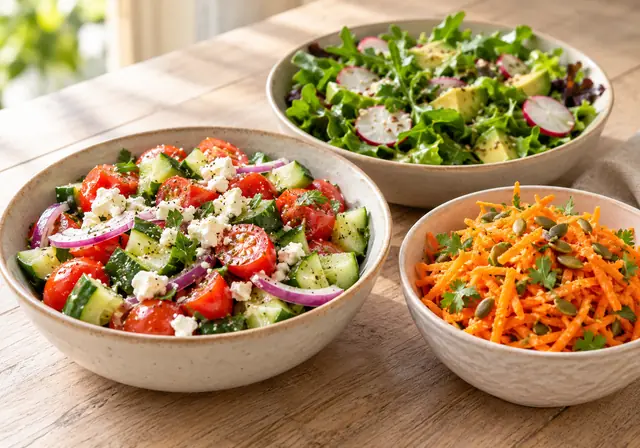 Vegetable salads
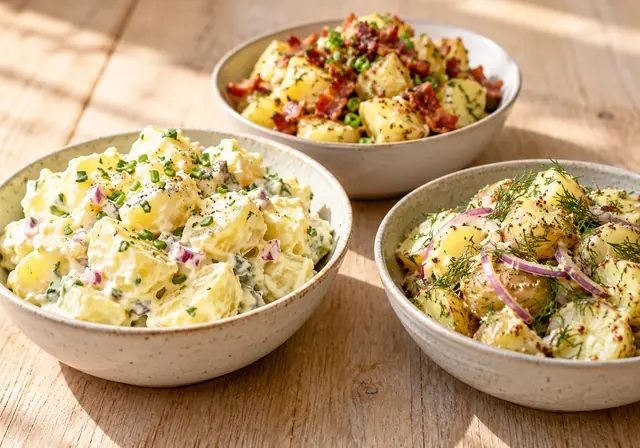 Potato salads
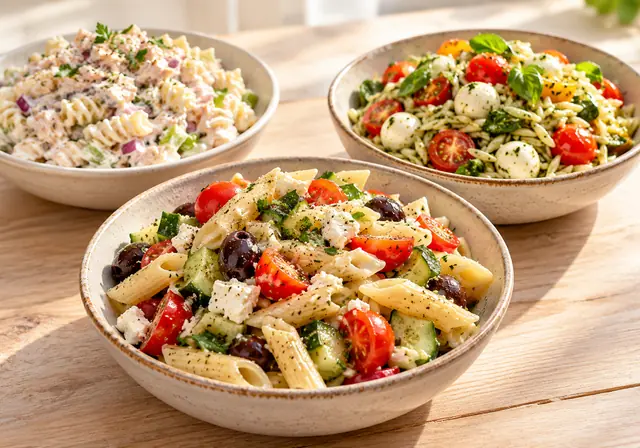 Pasta salads
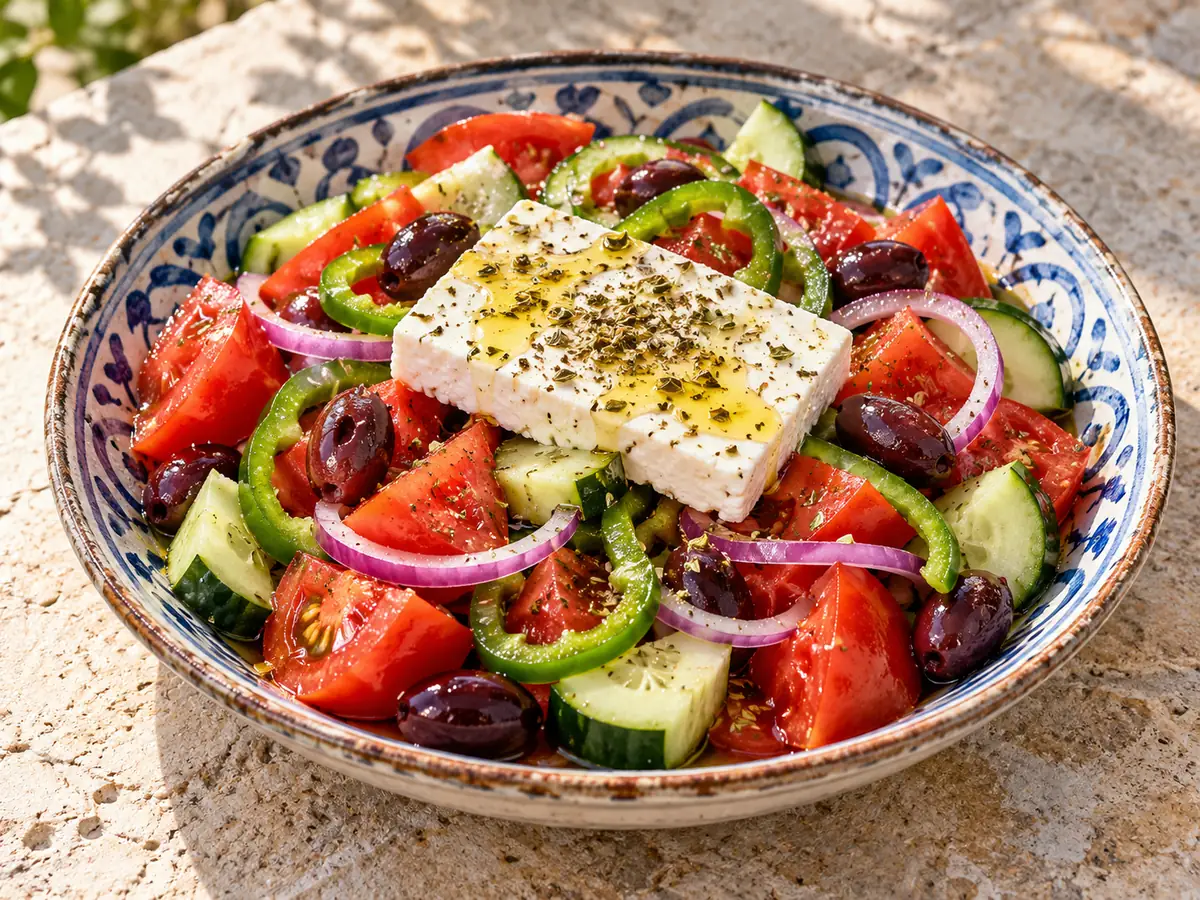 AI-generated
Subcategories
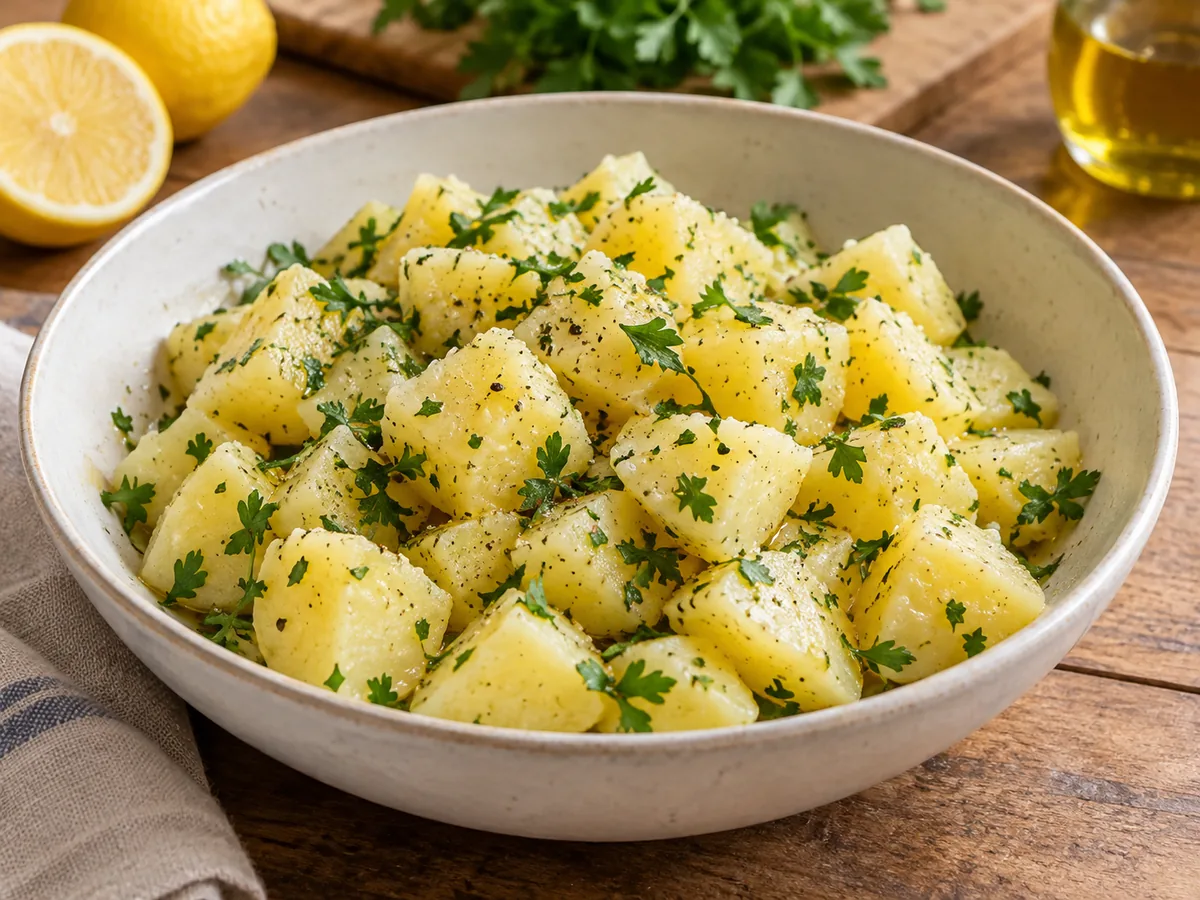
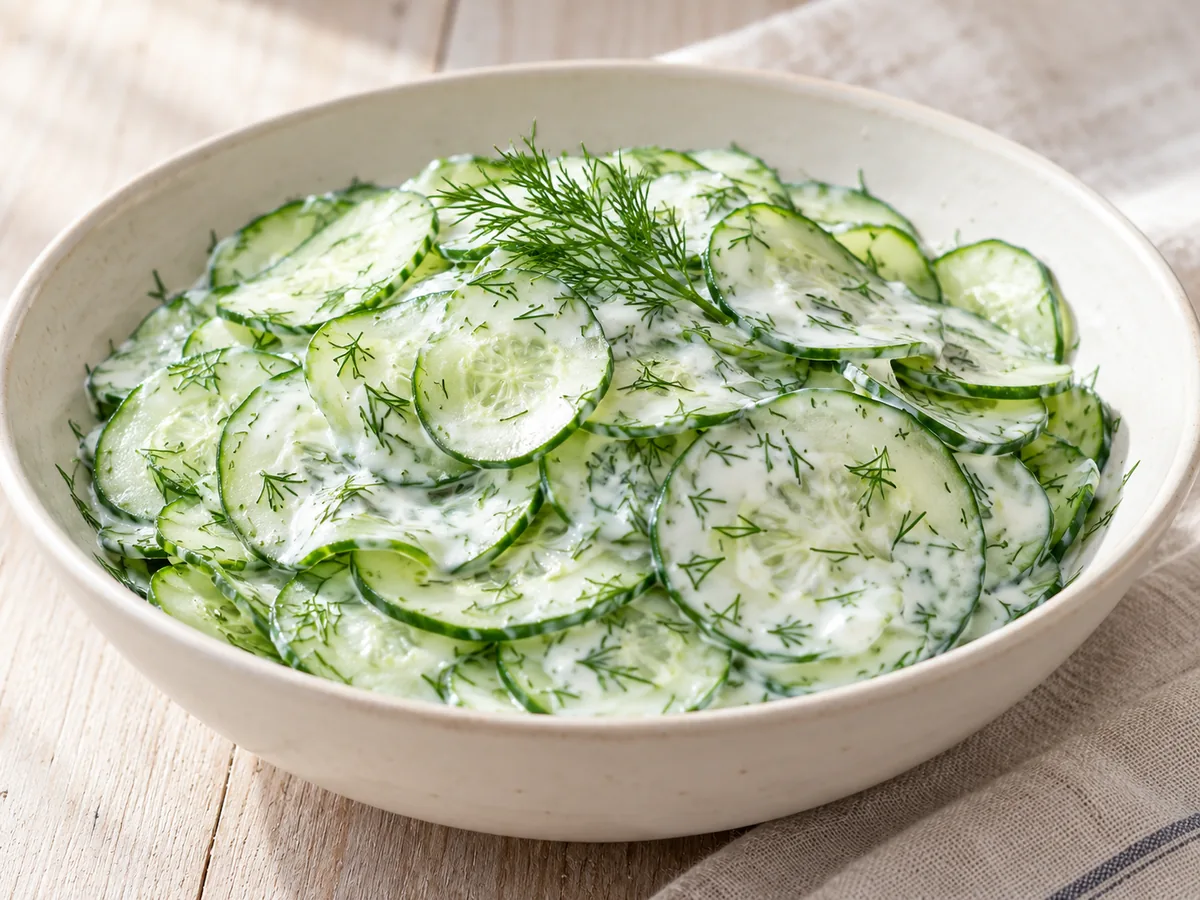
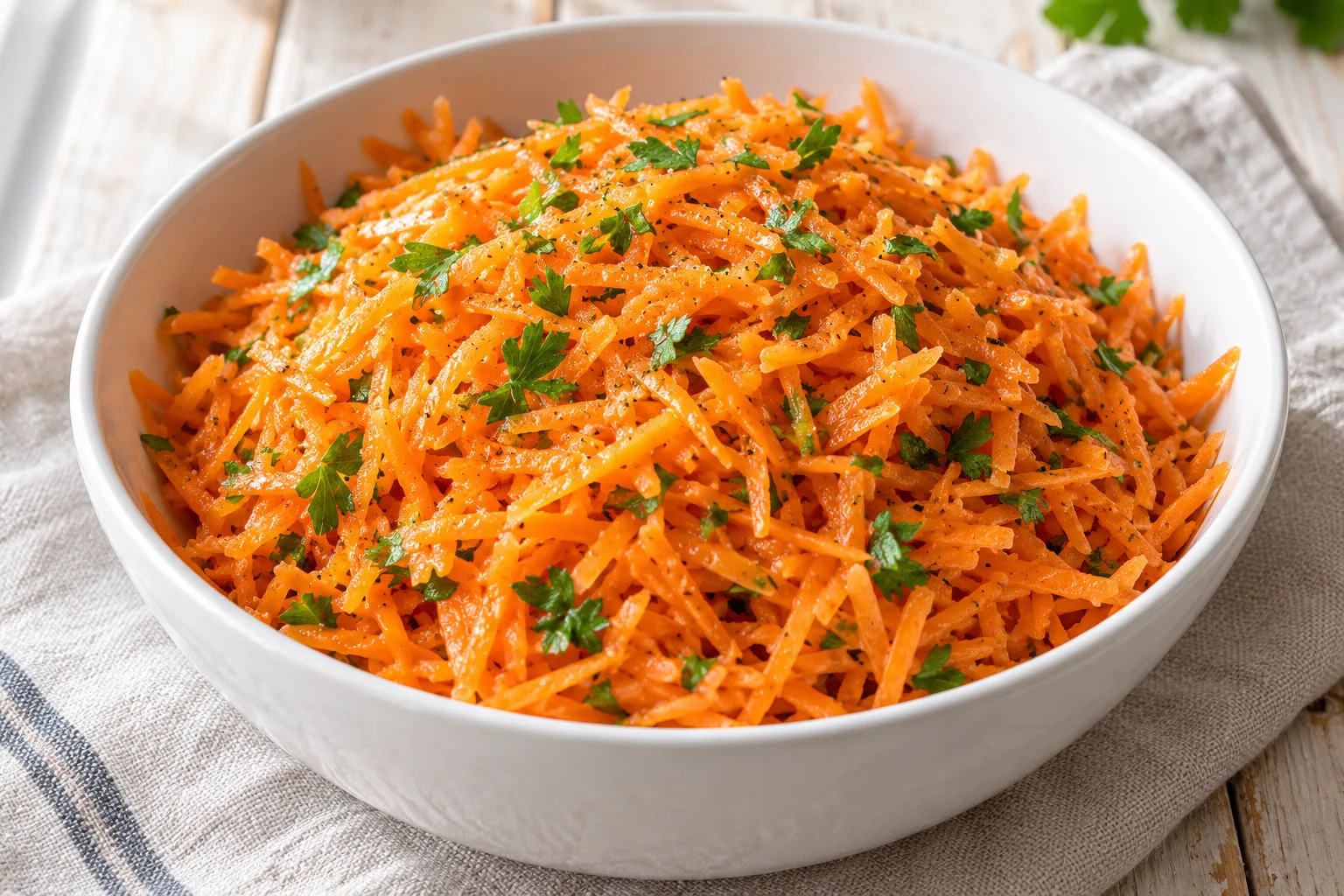
Salads
Salads go far beyond a handful of greens. Leafy salads, colourful vegetables and filling potato or pasta salads can serve as sides or meals in their own right.
They're welcome at a barbecue, on a picnic and at lunchtime. Fresh ingredients and contrasting flavours give every salad a distinct character.
Salads are more diverse than leafy greens
The word salad covers a broad range of foods. Some salads centre on tender leaves and fresh herbs, while others feature vegetables, potatoes, pasta or substantial additional ingredients. Their textures and flavours vary just as widely. A small leafy salad can complement a rich meal, but a more filling combination can work as lunch by itself. Choosing a salad is therefore not only a question of freshness. Consider its place in the meal and the ingredients that give it a distinct character.
Explore leaves, vegetables and other foundations
Leafy salads can taste mild, peppery or slightly bitter, depending on the leaves used. Vegetable salads may emphasise crunch, earthiness or sweetness. Potato salads often differ in whether they taste creamy or noticeably tangy, and pasta salads can range from light to quite substantial. These distinctions are especially useful for a buffet with several options. A good spread offers different flavours rather than several bowls that all taste alike. Individual regional traditions are worth recognising instead of assuming every salad follows one standard dressing.
Dressings change the whole experience
A dressing can introduce acidity, creaminess, herbs or stronger seasoning. The right choice depends on the other ingredients and the role the salad plays. A tangy accompaniment may balance a rich main course, while a milder dressing can allow delicate vegetables to stand out. A salad with an intense dressing does not necessarily need several additional toppings. When selecting for guests, consider whether the dish should be fresh and restrained or more distinctive. Clear descriptions of the dressing are useful because its ingredients may matter for allergies.
Dietary labels require care
Salads may appear naturally vegetarian, but cheese, fish, meat, eggs or other animal-derived components can be present. Nuts, sesame, dairy and gluten-containing ingredients can also occur in dressings or toppings. A salad made mainly from vegetables is not automatically vegan or safe for every allergy. For someone with a specific restriction, the actual ingredient list matters much more than the general label. When assembling a meal, consider the salad alongside the other dishes rather than assuming it supplies everything needed for a complete lunch.
Which salad should I choose?
First decide whether you need a side dish, a starter or a meal in its own right. Then consider whether crisp leaves, vegetables, potatoes or pasta best match your appetite. Acidity, creaminess and seasoning give further clues about flavour. For a gathering, a mix of salad styles can create genuine variety, especially when guests have different preferences. Browse the separate salad categories to find the appropriate type and read the individual recipe for its complete ingredients.
Explore all recipes
ⓘ Ratings come exclusively from approved community contributions.