

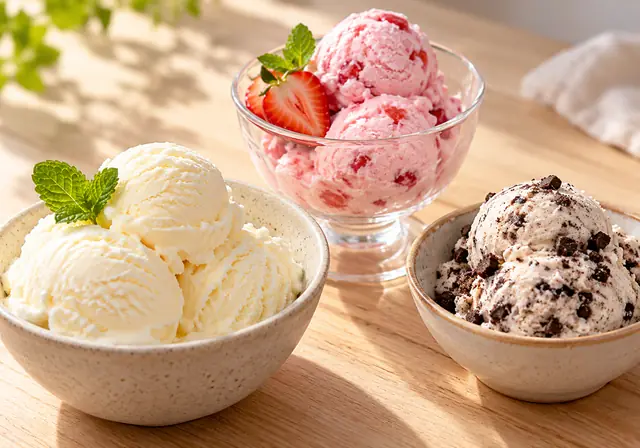
 Dairy ice cream
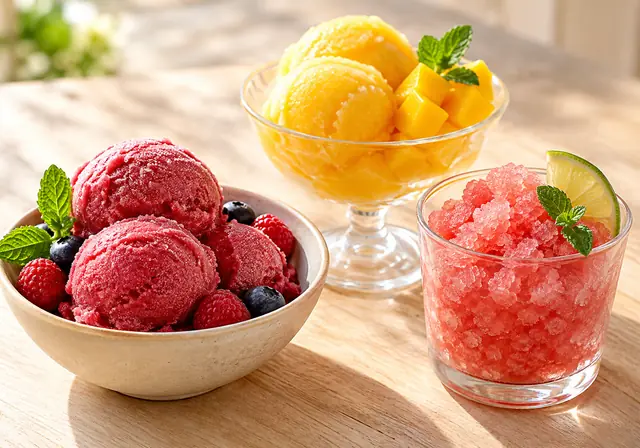 Fruit ice cream
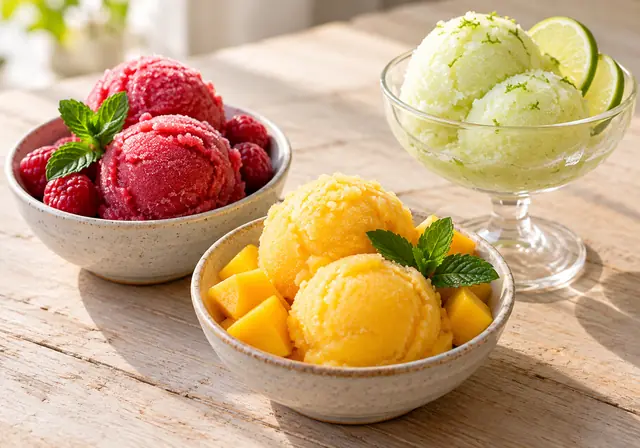 Sorbet
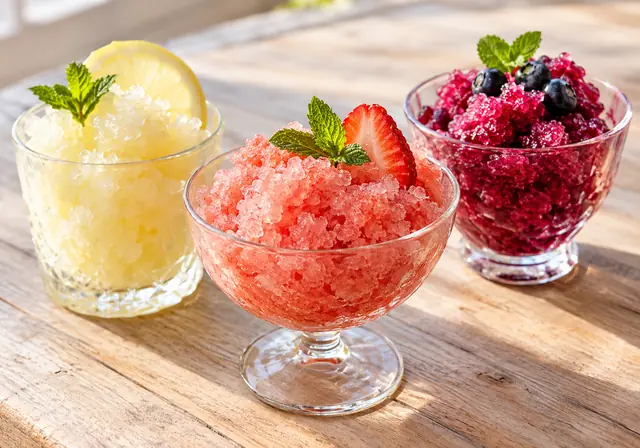 Granita
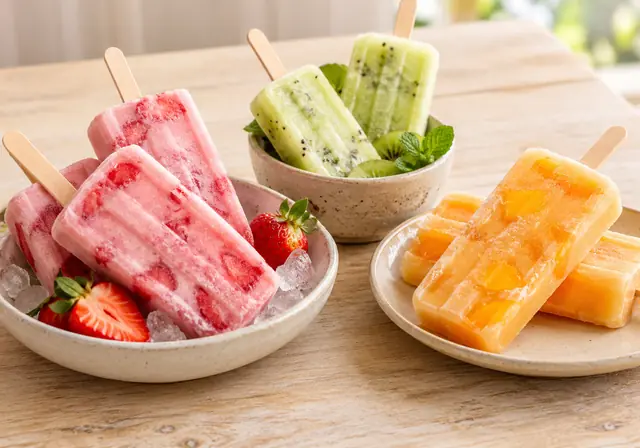 Ice pops
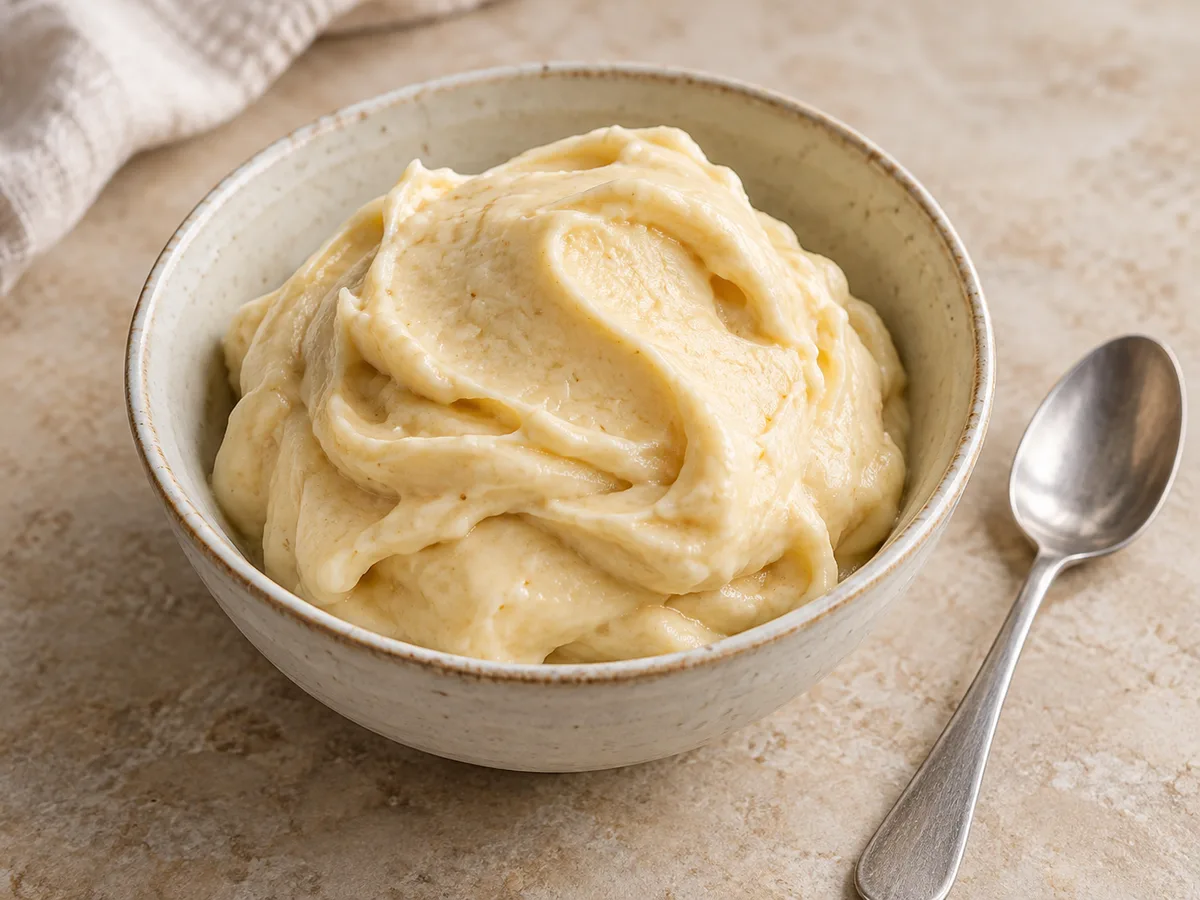 AI-generated
Subcategories
AI-generated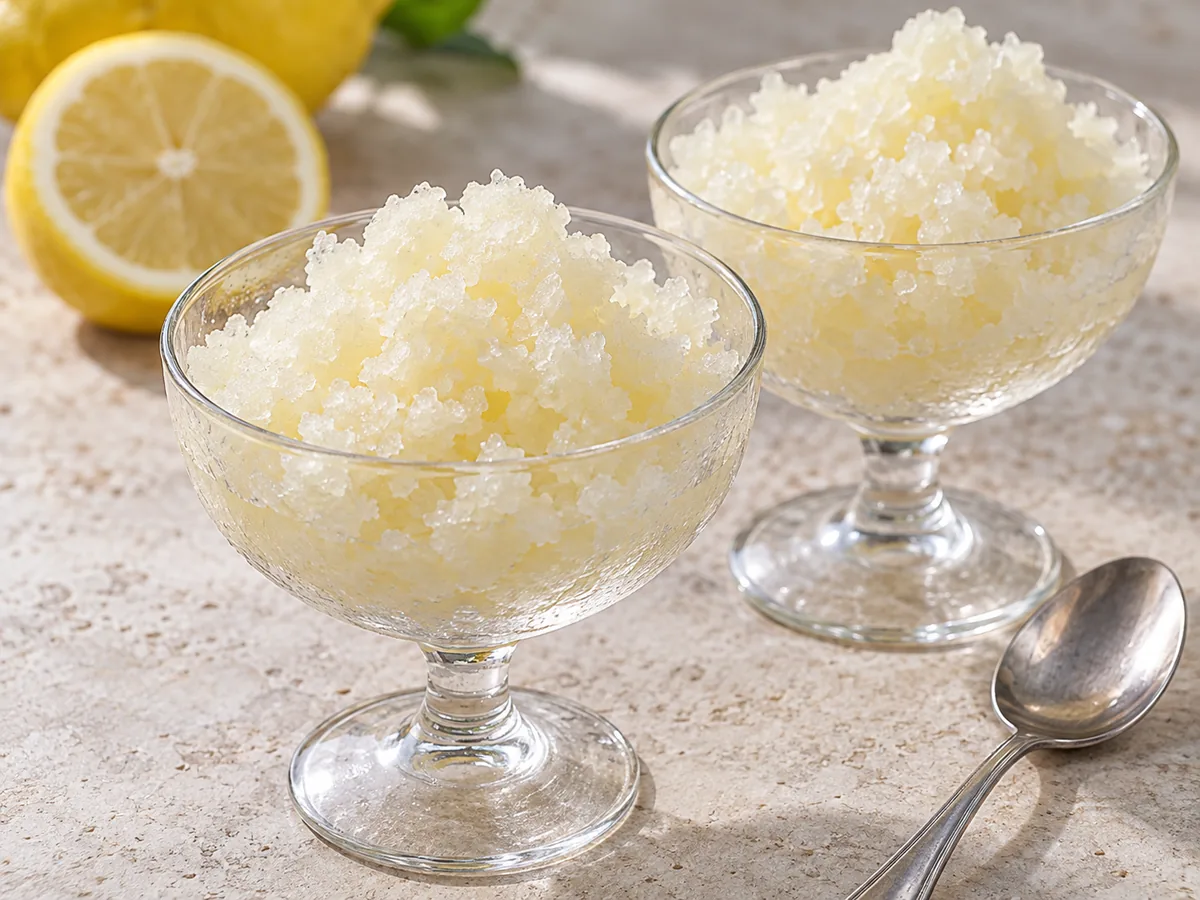 AI-generated
Ice cream & frozen treats
Ice cream and frozen treats are welcome on hot days and as desserts year-round. Creamy scoops, fruit ice cream, sorbet and granita offer very different ways to enjoy a cold sweet.
Some flavours evoke an ice-cream parlour; others put the taste of fresh fruit first. The choice is between rich, fruity and especially refreshing favourites.
Ice cream is a family of different frozen desserts
Frozen desserts differ in texture, ingredients and flavour. Milk-based ice cream is often associated with a creamy mouthfeel, while sorbet typically emphasises clearer fruit notes. Granita has a distinctive crystalline character, and ice pops refer primarily to a convenient serving format rather than one specific recipe. Choosing between these forms is as much about how the dessert feels as how it tastes. The ice category helps you understand those differences rather than grouping everything cold and sweet into a single interchangeable type.
Creamy, fruity and crystalline textures
A smooth milk-based ice cream offers a different sensation from a sharply refreshing fruit sorbet. Granita is valued for perceptible ice crystals rather than the same uniform creaminess, while ice pops may contain fruit or creamier components. The intensity of sweetness and acidity also varies considerably. Citrus fruits can bring lively sour notes, berries offer many combinations of sweet and tart, and chocolate or nuts create stronger, richer flavours. When serving multiple frozen desserts, contrasting textures can be more interesting than several similar flavours.
Frozen desserts have cultural traditions
Granita is closely associated with Sicilian food culture, whereas sorbet and different forms of ice cream have much wider and changing histories. No single description covers every regional way of enjoying frozen sweets. Modern recipes also introduce new plant-based ingredients and flavour combinations. A dessert inspired by a traditional style can be worth exploring without claiming to reproduce every detail of its origin. Cultural accuracy and clear descriptions of texture are more helpful than suggesting all regional variations are identical.
Do not assume a dietary classification
Fruit ice is not automatically vegan, and lactose-free ice cream is not necessarily free from milk proteins. Some frozen desserts contain nuts, eggs, soy or other ingredients that may matter for allergies. Even sorbets should be checked individually rather than treated as universally suitable. Serving format says very little about composition: a frozen pop can be fruit-based or made from a creamy mixture. People with coeliac disease or allergies also need to consider additional components and potential cross-contact. The exact ingredient list remains essential.
What frozen dessert fits the moment?
Consider whether you want a rich, smooth treat or a fruit-forward refreshment with a more icy texture. A small, tangy dessert may complement a substantial meal, while creamier flavours can stand on their own during an afternoon gathering. If several people are choosing, offer distinct flavour directions rather than assuming everyone likes the same kind of sweetness. The subcategories make it possible to compare these choices based on texture, ingredients and occasion rather than appearance alone.
Explore all recipes
ⓘ Ratings come exclusively from approved community contributions.