

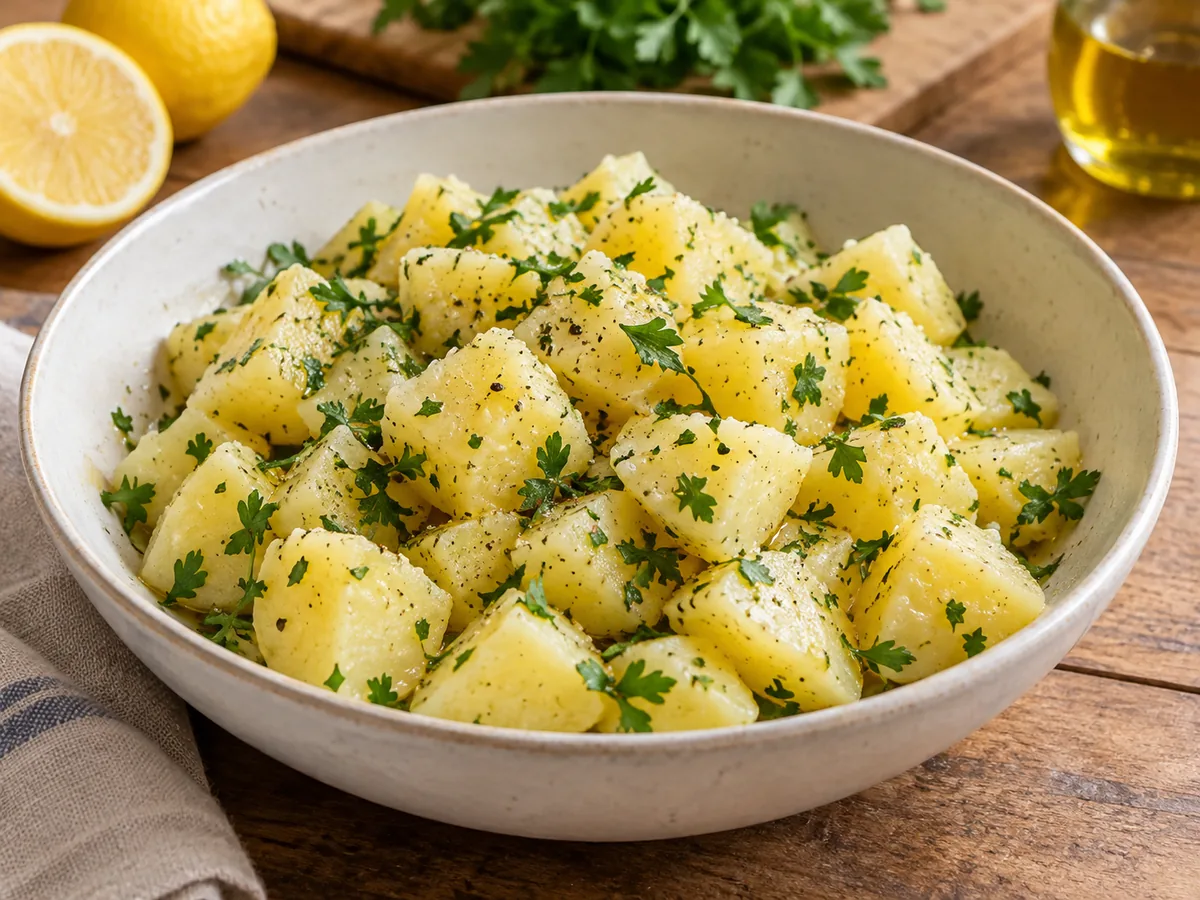
 AI-generated
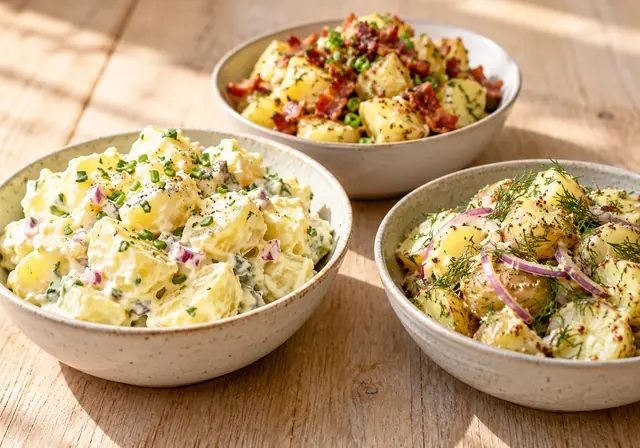 AI-generated
Potato salads
Potato salad is a much-loved classic with many regional personalities. Broth, vinegar, oil or creamy dressings give familiar potatoes very different flavours.
Potato salads are at home at picnics, barbecues and buffets. Regional styles range from tangy and savoury to mild and creamy.
Potato salad has many regional identities
Potato salad is familiar in many parts of Europe and beyond, but it does not have one universal flavour or composition. Some traditions favour a creamy dressing, while others highlight acidity, herbs or more pronounced savoury notes. Texture and potato variety also influence the overall experience. A potato salad can be a side dish, a buffet favourite or part of a simple meal. When browsing, look for the flavour profile and serving context rather than assuming that your family's preferred version represents every region. Different traditions deserve to be described accurately and without a false claim to a single authentic style.
Creamy or pleasantly tangy?
The dressing often determines how potato salad tastes. Creamy combinations can feel mild and rich, while sharper dressings may give a fresher, more vibrant impression. Herbs, onions and other seasonings create further contrasts, and their presence varies by tradition. Neither style is necessarily better; each can fit different main dishes and occasions. For a table with several rich foods, a tangier salad may provide a useful counterpoint. With a lighter meal, a more substantial version can take on a larger role. The actual ingredients remain important, especially for those avoiding eggs, dairy or other allergens.
A familiar choice for everyday meals and parties
Potato salad often appears at family celebrations, picnics and casual shared meals. Its popularity does not mean that everyone expects the same flavour. When selecting for guests, consider whether it is one side among many or a substantial part of the meal. Portion size matters, as does the rest of the buffet. Perishable ingredients and appropriate storage are relevant when food will be served for an extended period, particularly outdoors. A broad description of potato salad cannot establish how long a specific preparation can be kept safely. The ingredients and actual circumstances must guide those decisions.
Match potato salad to the rest of the table
Start with the overall balance you want. A rich, creamy salad may fit beside simple foods, while an acidic and herb-forward version can bring contrast to a stronger main course. Consider how firm or soft you prefer the potato pieces and how prominent the dressing should be. For a shared gathering, differing regional expectations can be worth acknowledging. A potato salad served as a small side need not resemble one intended to be the centre of a light lunch. Explore the actual composition instead of judging only by the familiar name.
Respect variety rather than naming one original
Across regions, potato salad recipes are shaped by local habits, family preferences and available ingredients. Claims that every authentic version must contain or exclude a particular dressing are rarely useful. The variation is part of the food culture. Potatoes with a firmer texture can create a different mouthfeel from softer varieties, and additions such as herbs or onions alter the flavour. For people with allergies or dietary restrictions, dressing ingredients must be examined independently. The most helpful category information recognises the many legitimate regional styles and describes the difference between creamy, tangy and more savoury versions.
Explore all recipes
ⓘ Ratings come exclusively from approved community contributions.