

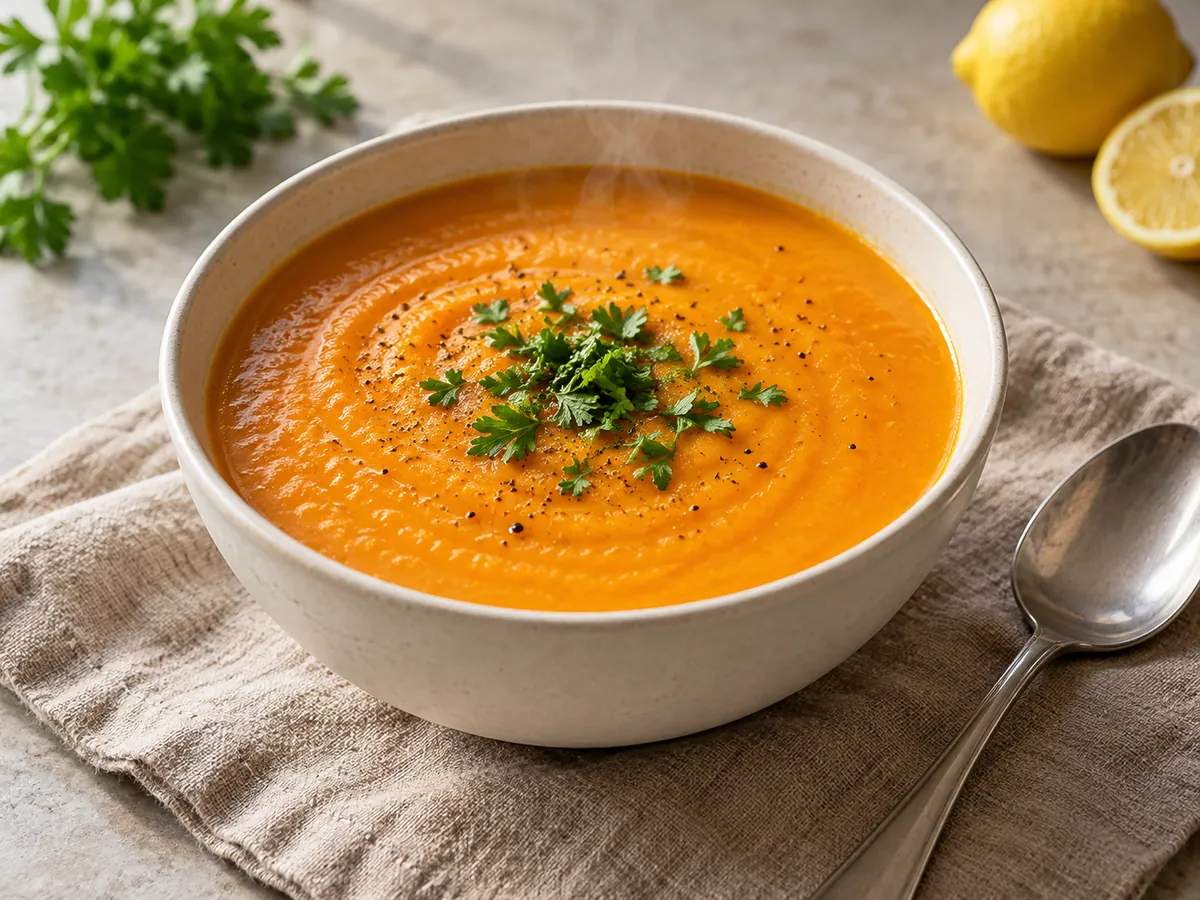
 AI-generated
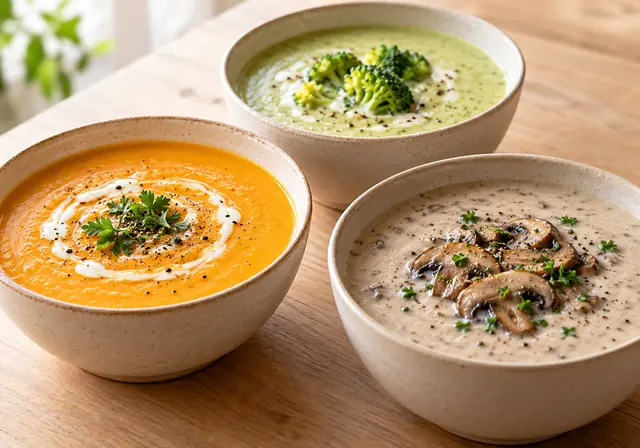 AI-generated
Cream soups
Cream soups make comforting meals from vegetables, pulses and other ingredients. Carrot, pumpkin and potato soups are much-loved examples.
Cream soups offer a wide range of mellow, savoury and richly aromatic flavours. They fit equally well as a small starter or a comforting meal.
Creamy soups are defined by texture
Cream soups are known for a smooth, cohesive mouthfeel, but they can range from delicate and vegetable-forward to particularly rich and comforting. The term describes an eating experience more than a fixed ingredient list. A gently flavoured soup may open a meal, while a fuller-bodied bowl can play the role of lunch or dinner. Some versions are notably thick; others feel lighter despite their smoothness. When choosing between them, consider the dominant vegetables, the strength of the flavour and whether you want the soup to accompany something else or stand on its own.
Vegetables create different flavour profiles
Root vegetables can lend earthy sweetness, leafy greens can bring more herbaceous notes, and other vegetables contribute different colours and aromas. The same creamy texture does not make every soup taste alike. A restrained vegetable soup may suit someone who prefers gentle flavours, while a more strongly seasoned one can be an intentional centrepiece. Consider how the flavours will work with the rest of the meal. A rich main dish might call for a lighter starter, and a simple lunch may benefit from a more substantial soup. The vegetable itself deserves more attention than the broad category name.
Starter or complete meal?
Portion size and the surrounding food determine whether a creamy soup acts as an introduction or a full course. A small bowl before dinner should complement what follows, while a larger serving may be paired with bread or another suitable side. If the soup is already very rich, the accompaniment need not add further heaviness. For groups, consider how strongly seasoned the dish is and whether alternatives are needed. Do not assume the soup is vegetarian just because vegetables feature prominently: stocks and additional ingredients can contain meat or fish. The full ingredients remain decisive.
Which creamy soup fits your occasion?
Start with your preferred flavour. Are you looking for mild vegetables, a more earthy character or something with brighter herbal notes? Next think about thickness and whether the soup will be served by itself. A family lunch has different demands from the opening course of a celebration. Colour can make a bowl attractive, but it tells you little about the ingredients or dietary suitability. Reading the recipe provides a better indication of its flavour and composition. That is especially important when serving people who avoid dairy, gluten or animal-derived stocks.
Creamy does not always mean cream
A smooth soup can achieve its character through vegetables, pulses or other thickening ingredients and need not contain dairy cream. Conversely, a soup that looks vegetable-based may still use butter, milk or a dairy-rich topping. Texture and ingredient composition are separate questions. This distinction matters for lactose intolerance, milk-protein allergies and vegan dietary preferences, which are not interchangeable. Cream-based soups may be enjoyable, but the word creamy cannot verify what they contain. A precise ingredient list allows you to select the flavour and consistency you want without making unsupported assumptions about dairy or other allergens.
Explore all recipes
ⓘ Ratings come exclusively from approved community contributions.