
No recipes match these filters yet.
Stews
Stews are generous one-pot meals that bring together vegetables, potatoes, pulses or meat. Many are beloved examples of home cooking.
A hearty stew is particularly welcome when the weather turns cold. Regional ingredients and seasonings give each pot its own character.
Stews are meals built from several ingredients
A stew brings together vegetables, pulses, potatoes, meat or other ingredients into one substantial dish. The components share a common flavour, yet their textures can remain distinct. Some stews are rich and hearty; others emphasise vegetables and feel comparatively light. They are often associated with family meals, but the category contains many regional approaches rather than one fixed form of home cooking. When browsing, think about which ingredients should take centre stage and whether you want a deeply savoury meal or something with fresher notes. A stew can be complete without requiring several separate side dishes.
Where does soup end and stew begin?
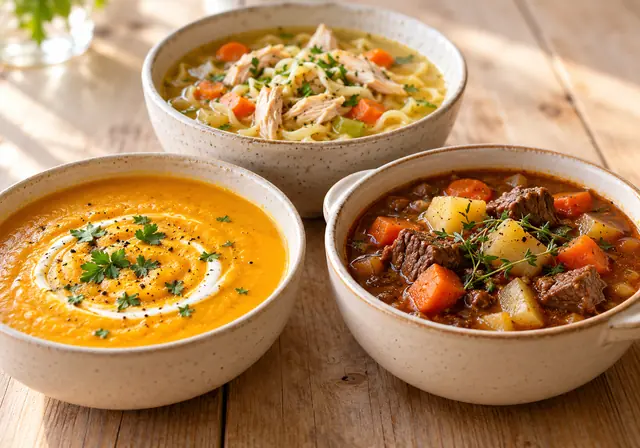
There is no universally agreed dividing line between a thick soup and a stew. In general, a stew tends to have substantial pieces of food within a relatively cohesive dish, while soup may have a more pronounced liquid component. Local culinary language and traditions can blur those distinctions. Rather than arguing over a label, consider how the food will be eaten and whether its ingredients provide a full meal. A brothy stew and a dense soup can be closer in character than their names suggest. Both deserve descriptions that explain their actual ingredients and texture.
Stews suit different kinds of family tables
A shared stew is often linked with familiar, comforting food, yet the flavours and ingredients can be surprisingly varied. Some include many vegetables and pulses, while others use meat or potatoes as their main feature. A family dinner may welcome gentle seasonings, whereas another group might enjoy stronger spices. The number of servings and any dietary requirements should guide the choice. Check the whole dish rather than the visible ingredients alone: stocks, sausages, dairy additions and sauces can affect whether the stew fits vegetarian or other dietary preferences.
Choose a stew by what you want to eat
Start with the ingredients you enjoy most. A vegetable-led stew offers a different experience from one dominated by potatoes, beans or meat. Next think about texture and flavour. You might prefer distinct pieces in a lighter broth or a richer, thicker dish with integrated flavours. The other courses matter too: a substantial stew may need only a fresh accompaniment, while a smaller portion can become part of a wider menu. Looking at the ingredient list and portion count helps you decide more reliably than a vague claim that every stew is filling or rustic.
Stews do not have to be heavy
The term stew often evokes rich winter food, but the category also includes bright, vegetable-forward dishes and varieties enjoyed throughout the year. Local traditions differ in the use of legumes, greens, potatoes, meat and seasonings. There is no single flavour that every stew must share. Even the perception of heaviness depends on portions and the balance of ingredients. The useful questions are whether the dish should stand alone, what textures are appealing and how it will fit the people at the table. This makes stews a flexible family of meals rather than a synonym for one kind of hearty cooking.
There are no matching recipes here yet. Browse other categories to choose dishes or drinks.
Explore all recipes
ⓘ Ratings come exclusively from approved community contributions.