

No recipes match these filters yet.
Juices
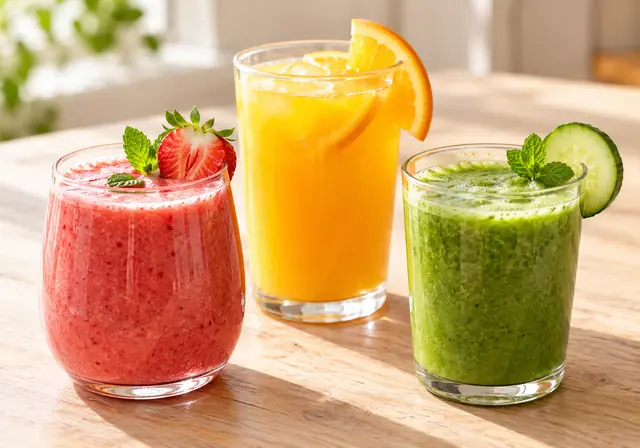
Juices bring the flavours of fruit and vegetables to the glass.
Orange, apple, berries and colourful vegetable blends inspire different favourites.
Fruit and vegetable juices offer varied flavours
Juices can express the sweetness, acidity and aroma of different fruits or vegetables. Citrus, apple, berries and vegetable combinations produce contrasting drinks, from mild and rounded to bright or earthy. A colourful juice is not necessarily sweeter than a paler one, and the name does not reveal every ingredient. When exploring, consider whether you want a drink to accompany food or provide a distinct fruit or vegetable flavour on its own. The category should help distinguish those profiles without making unsupported claims that a glass of juice is nutritionally identical to whole fruit.
Juice, nectar and juice drinks are different
Product terms such as fruit juice, nectar and juice drink can have defined meanings under applicable food rules, and their composition may differ. A drink containing fruit flavour is not automatically pure juice. Added sugar and other components also vary by product and jurisdiction. For informed selection, check the actual ingredient declaration rather than relying on packaging colour or a generic fruity label. When describing recipes, use accurate terms for what the drink contains. This matters for both taste expectations and people managing particular dietary needs.
Judge sweetness and acidity carefully
Fruit naturally contains sugars and acids, but their balance differs by variety and product. A tart citrus juice may feel more refreshing than a mellow fruit blend, while vegetable ingredients can introduce entirely different notes. The perception of sweetness is not a simple indicator of total sugar content. Portion size and whether the juice is diluted or combined with other ingredients can also change the experience. Choose by taste and composition rather than by claims that a particular flavour automatically makes a drink healthy.
Juices for families and guests
Juices can be offered at breakfasts, celebrations and shared meals, but guests may prefer different levels of acidity or sweetness. A smaller selection of contrasting flavours can be more useful than many similar drinks. Check whether the beverage is genuinely juice or a mixed drink with additional ingredients. For children or people with health-related dietary needs, portion size and sugar content may be relevant. A category description cannot establish suitability for every individual, and water should remain a perfectly normal alternative at any meal.
Which juice suits your tastes?
Start by deciding whether you want a gentle fruit flavour, pronounced citrus acidity, berry notes or a vegetable-led drink. Think about how it will pair with food and whether a smaller serving is more appropriate. If you enjoy sparkle or a lighter fruit flavour, a spritzer may be a separate option rather than the same kind of drink. Reading labels helps distinguish full-strength juice from nectar and other beverages. The category's purpose is to make those differences understandable, not to rank juices according to unverified wellness promises.
Juice and whole fruit are not the same
A glass of juice can contain fruit-derived components, but it generally differs from eating the whole fruit in texture and the way fibre is retained. Exact composition depends on the drink, and blending fruit into a smoothie creates another category again. It would be misleading to promise that every juice supplies the same benefits as whole fruit or vegetables. Focus instead on flavour, declared ingredients, portion and the drink's role in a broader meal. These details support realistic choices without overstating what juice can do.
There are no matching recipes here yet. Browse other categories to choose dishes or drinks.
Explore all recipes
ⓘ Ratings come exclusively from approved community contributions.