

 AI-generated
 AI-generated
Puddings
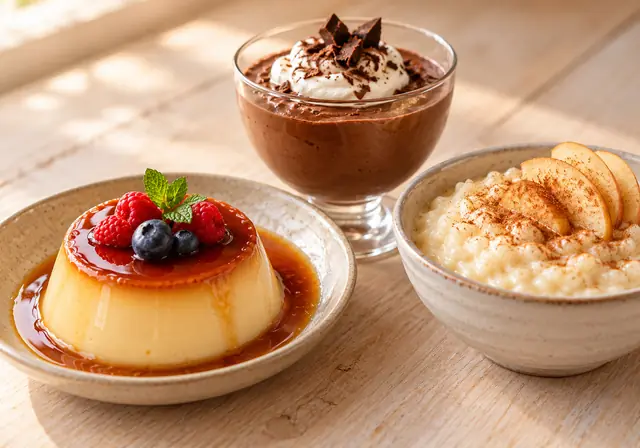
Pudding is a familiar dessert that often brings back childhood memories. Vanilla, chocolate, caramel and fruit pairings offer many ways to enjoy this creamy favourite.
Served simply in a bowl or with fruit and sauce, pudding is an easy-going sweet finish to a meal.
Pudding ranges from silky to quite firm
Pudding is a familiar dessert name, but it does not describe a single consistency. Some puddings are very smooth and tender, while others are firmer or almost sliceable. Their flavours may be mild, softly sweet, fruity or intensely chocolatey. The specific ingredients and local food traditions shape what people understand by the word. When choosing a pudding, think about texture alongside flavour. A delicate spoon dessert can offer a gentle finish to dinner; a richer pudding may feel like the centrepiece of a sweet course. Neither style needs to be dressed up to be satisfying.
Flavours and accompaniments
A mild pudding can allow fresh fruit or an aromatic accompaniment to take the lead, while chocolate or coffee-flavoured varieties may need little extra. Acidity can balance sweetness, and warm spices can create a different impression from vanilla or cocoa. Consider how the dessert fits with other sweets already being served. A particularly rich cake might be better accompanied by a small, restrained pudding than by another equally intense choice. The combination matters more than the sheer number of toppings, and individual preferences vary in how sweet, fruity or full-bodied the final dessert should taste.
Pudding for families and celebrations
Because pudding is often associated with comfort and childhood, it is easy to assume everyone likes the same kind. In reality, guests differ in their preferences for thickness, sweetness and flavour. Smaller portions can work well in a dessert selection, especially if different types are available. For anyone with allergies or intolerances, however, a familiar name is not enough: puddings may contain dairy, eggs, nuts or other ingredients depending on the recipe. Checking the actual composition is necessary, especially when toppings or accompanying sauces introduce additional ingredients that are not obvious from the dessert's appearance.
Which pudding should you choose?
Start with how the pudding should feel in the mouth: delicate and creamy, spoonably thick or comparatively firm. Then choose between milder flavours, fruit notes and stronger cocoa or coffee accents. Think about whether it follows a heavy meal, accompanies an afternoon treat or forms part of a broader dessert table. Portion size can make a rich pudding feel more appropriate after dinner. The category is intended to help compare contrasting styles without assuming that one traditional flavour is the only proper choice. Detailed ingredient information remains essential when selecting for special diets.
Pudding does not always mean milk pudding
Many people associate pudding with milk and starch, but the term is used for different foods in different regions. Plant-based variations may have a different flavour and texture from dairy-based ones. Conversely, a dessert that looks light or fruit-forward can still contain milk or eggs. Lactose intolerance is not the same as an allergy to milk proteins, and a lactose-free dairy product may still contain those proteins. The word pudding cannot settle these questions. Reliable ingredient lists, descriptions of consistency and the actual components are better guides than a broad category name.
Explore all recipes
ⓘ Ratings come exclusively from approved community contributions.