

No recipes match these filters yet.
Dairy ice cream
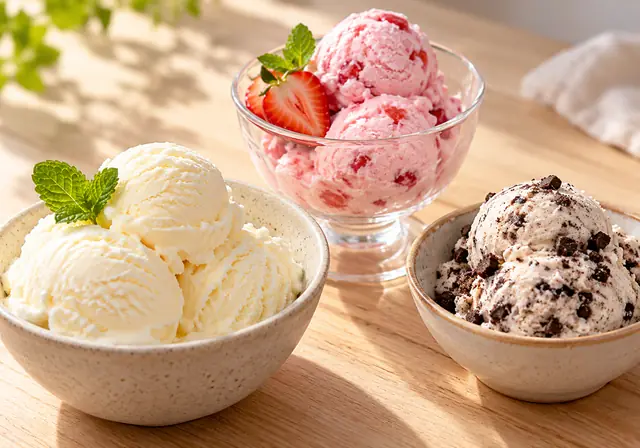
Dairy ice cream is the creamy classic of the ice-cream shop. Vanilla, chocolate, nuts and other familiar flavours bring a touch of nostalgia to a summer afternoon.
A scoop is lovely on its own or beside cake, fruit and a warm dessert. This category celebrates rich, creamy ice-cream flavours.
What makes milk-based ice cream distinctive?
Milk-based ice cream is associated with a creamy mouthfeel and flavours ranging from delicate vanilla to pronounced cocoa, nuts or fruit. Richness, sweetness and texture differ from one variety to another, so the broad name does not describe every scoop precisely. Some styles feel especially smooth and full-bodied, while others are lighter in impression. Milk ingredients contribute to the characteristic flavour, but the entire recipe determines the final result. If you enjoy a dessert with a soft, creamy character, exploring milk-based frozen treats allows you to compare many flavour profiles within one familiar family.
Mild and intense flavours
Vanilla and other gentle flavours can complement additional desserts without overwhelming them. Chocolate, coffee and nut variations often have a more distinct personality, while fruit can add freshness and acidity to a creamy base. The choice is not simply between plain and exciting. A carefully balanced mild ice cream may be just as appealing as a strongly flavoured scoop. Think about whether the ice cream will stand alone or accompany other sweets. Richer varieties can benefit from smaller portions, particularly after a substantial meal, while more restrained flavours offer a different balance.
Milk ice cream and dietary requirements
Milk-based ice cream normally contains dairy ingredients, but not all varieties contain the same amount of lactose or the same possible allergens. Additions such as nuts, eggs, biscuits or sauces may introduce further ingredients to consider. Anyone with a milk-protein allergy requires different checks from someone with lactose intolerance. A fruit-flavoured dairy ice cream is not automatically free from milk. Labels and complete ingredients are therefore important, especially when serving guests who follow vegan diets or avoid particular allergens. The category name indicates a general style, not a certification of dietary suitability.
Choose a scoop for your dessert
A small scoop with a gentle flavour can accompany another sweet course, while a richer or more assertive variety can serve as the dessert's centrepiece. Consider whether you prefer vanilla-like, nutty, chocolate or fruit accents and how much sweetness will feel right. The occasion also matters: a quick afternoon treat offers different possibilities from a dessert served after dinner with guests. Ice cream should complement the rest of the menu instead of adding unnecessary duplication of flavours. The actual ingredients and intended serving size help make that choice.
Lactose-free and dairy-free are different
A lactose-free ice cream may still be made with milk and contain milk proteins. Dairy-free versions use another kind of base, but they are not automatically free from all allergens or suitable for every individual. Vegan products exclude animal-derived ingredients more broadly. These distinctions should not be collapsed into one reassuring label. Flavours can also conceal ingredients, particularly in coatings, inclusions and toppings. For people with allergies, accurate product information and control of cross-contact are essential. It is better to be precise about what an ice cream contains than to make general claims based on its flavour or texture.
There are no matching recipes here yet. Browse other categories to choose dishes or drinks.
Explore all recipes
ⓘ Ratings come exclusively from approved community contributions.