

No recipes match these filters yet.
Leafy salads
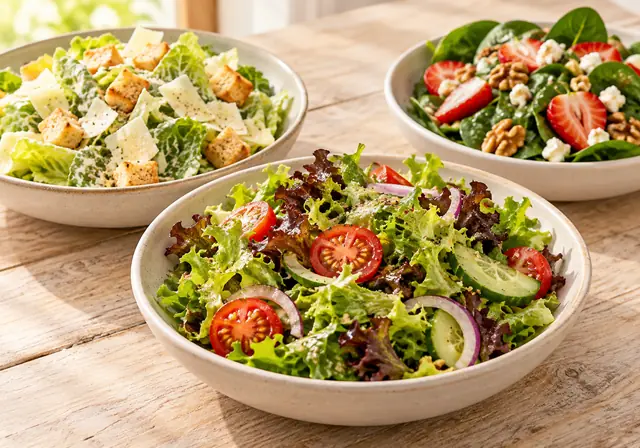
Leafy salads bring fresh greens to the plate. Lettuce, rocket, lamb's lettuce and mixed leaves have noticeably different flavours.
They work as a bright side for a warm main or as a base for a bigger salad bowl. Fruit, vegetables and nuts can add contrasting tastes.
Leafy salads bring freshness to a meal
Leafy salads include more than one kind of green leaf. Tender lettuce, crisp leaves, peppery varieties and more assertively bitter greens create noticeably different eating experiences. Some have a mild flavour that welcomes stronger accompaniments, while others contribute their own character. The category is especially useful when you want freshness without making every salad a complete main course. A small serving may complement dinner; a more generous mixture can anchor a light lunch when paired with other ingredients. Choosing the greens for their texture and flavour makes more sense than treating every leaf as interchangeable.
Mild, peppery and pleasantly bitter notes
Salad leaves range from softly sweet to peppery or pleasantly bitter. Those differences can shape which other vegetables, fruits or dressings work well alongside them. A delicate lettuce may be overwhelmed by a very strong accompaniment, while a more robust leaf can stand up to assertive flavours. Bitterness is a normal characteristic of some varieties, not proof that the salad is poor quality. Consider how much contrast you want and whether the leaves should be the main focus. Their freshness and natural variety allow a simple salad to remain interesting without a complicated mixture of ingredients.
A side dish or an opening course
A leafy salad can serve as a fresh counterpoint to a hearty main course or as a small starter before a larger meal. The role determines the portion and how many other ingredients are needed. Crisp leaves may bring contrast to soft or creamy foods, while a salad with additional components can feel more substantial. At a family table, it can help to offer a choice of flavours rather than expecting everyone to enjoy the same bitterness. The actual ingredients matter for allergies and dietary preferences, especially when dressings contain dairy, mustard, nuts or other additions.
Choose greens to match what you are eating
Start with the main dish and ask what kind of contrast would be welcome. A mild, delicate leaf often suits more pronounced seasonings elsewhere on the plate. Stronger, peppery greens can add interest beside plainer foods. Texture is another useful consideration: tender leaves and crisp varieties offer different sensations. For a starter, a small and straightforward selection may be enough, whereas a standalone lunch might call for more substantial ingredients. Browse by taste and purpose instead of assuming that the label green salad describes the same experience every time.
Bitter leaves deserve a fair description
Some leafy greens have naturally bitter compounds that contribute to their identity. This need not be a fault, and many people actively enjoy that quality. Others prefer milder varieties, so a thoughtful selection recognises both preferences. The maturity of the leaf, its variety and its companions influence the final flavour. Darker colour alone does not establish nutritional superiority or suitability for a particular diet. A salad's dressings and toppings may introduce ingredients that are not visible at first glance. The most useful category description explains flavour and texture honestly, without reducing all leaves to bland decoration.
There are no matching recipes here yet. Browse other categories to choose dishes or drinks.
Explore all recipes
ⓘ Ratings come exclusively from approved community contributions.