

No recipes match these filters yet.
Pasta salads
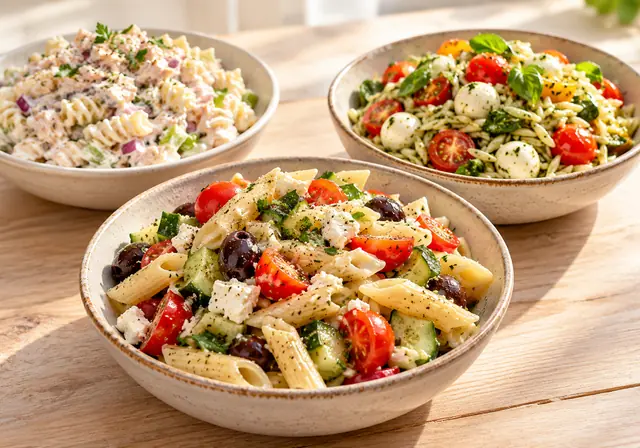
Pasta salads are regular favourites at picnics, parties and barbecues. Pasta with vegetables, herbs, cheese or other additions makes a colourful filling salad.
Mediterranean tomato flavours sit alongside more traditional combinations. A pasta salad can be a side or a light meal.
Pasta salad belongs at more than picnics
Pasta salads combine noodles with vegetables, herbs, dressings and sometimes more substantial ingredients. They are popular at buffets, shared lunches and outdoor gatherings because they offer familiar flavours in many combinations. Yet a pasta salad can be light and vegetable-forward or quite rich, depending on its contents. The type of pasta influences texture, while the dressing shapes the flavour. When choosing, consider whether the salad should be a supporting side or a filling part of the meal. That distinction is more useful than assuming every pasta salad has one standard set of ingredients.
Fresh and creamy styles differ
Some pasta salads emphasize bright vegetables, herbs and acidity; others have a creamier dressing and a fuller, more indulgent character. The noodle shape changes how the ingredients feel together, and additions such as cheese or nuts can make a considerable difference. A fresher version may contrast with heavier foods at a buffet, while a rich pasta salad can stand more prominently on its own. Neither approach is intrinsically better. What matters is a coherent combination of flavours, texture and serving role rather than the number of ingredients included.
Plan a pasta salad for guests
For larger groups, pasta salad can be one choice among several shared dishes. Consider whether it offers a flavour and texture that differ from the rest of the spread. Guests with dietary requirements need more information than the name: regular wheat pasta contains gluten, and dairy, eggs or other allergens may appear in the dressing or toppings. A vegetable-heavy version is not automatically vegan. Food safety also matters for outdoor meals, particularly with perishable dressings or other additions. Actual storage conditions and ingredients, not the salad category, determine how it should be handled.
Find the best match for your occasion
Start by asking whether you want a light side or a more substantial pasta-based dish. Then choose between herb-led, tangy, creamy and more deeply savoury flavours. Texture matters as well: small pasta shapes and larger pieces create different eating experiences. At a family picnic, convenient shared portions may matter, while a buffet calls for variety alongside other foods. The individual ingredient list provides more useful guidance than a vague description such as Mediterranean or classic. Choose for the people who will eat it and the context in which it will be served.
Pasta salad is not automatically light food
The word salad sometimes suggests a particularly light meal, but pasta salads range widely in richness and portion size. Noodles, dressings, cheese, vegetables and other ingredients all contribute to the finished dish. A small vegetable-forward portion differs from a generous serving with a rich creamy dressing. Neither can be judged from the category name alone. The texture and flavour can also change depending on the pasta used. A useful description focuses on the actual combination and its role in the meal, avoiding unsupported nutritional claims based on the word salad.
There are no matching recipes here yet. Browse other categories to choose dishes or drinks.
Explore all recipes
ⓘ Ratings come exclusively from approved community contributions.