

No recipes match these filters yet.
Casseroles & gratins
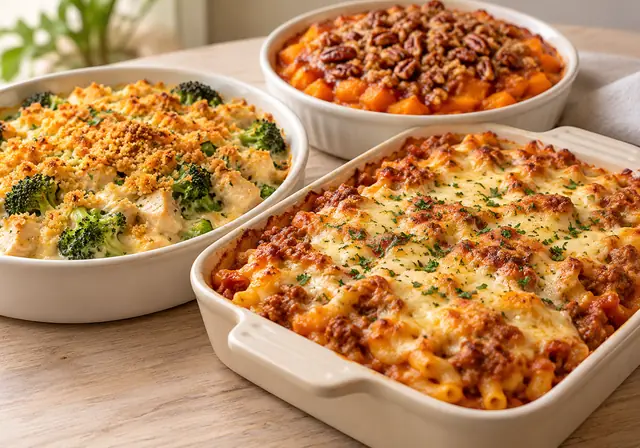
Casseroles and gratins are comforting oven dishes made for sharing. Vegetables, potatoes, pasta and other ingredients come together beneath a tempting golden top.
They suit family dinners, relaxed gatherings and everyday meals. Some are rustic and hearty, while others are creamy and delicate.
Casseroles bring several ingredients together
A casserole or oven-baked one-dish meal combines ingredients into something intended to be enjoyed as a whole. Vegetables, potatoes, pasta, pulses and sometimes meat or fish can create very different results. Some dishes are creamy and comforting; others put vegetables or brighter flavours at the centre. Sweet baked dishes also belong to the broader family in some culinary traditions. What unites these foods is not a compulsory ingredient or a single level of richness, but the relationship between their components. This makes casseroles a versatile choice for a shared meal rather than one narrowly defined style of food.
Ingredients determine texture and character
A casserole is not automatically heavy, nor is a vegetable-based version automatically light. Its character depends on the proportion of vegetables, grains, legumes, cheese, sauces and other ingredients. A creamy component creates a different impression from a tomato-rich or herb-forward combination. Texture also matters: some dishes contain clearly distinct pieces, while others are soft and closely integrated. For vegetarian guests, make sure that meat, fish and meat-derived stocks are absent. Anyone managing allergies or intolerances needs to see the full ingredients, including sauces, toppings and any additional sides.
A good choice for family meals and gatherings
Casseroles are often associated with meals shared from one baking dish. That can feel welcoming at a family table, but the choice still needs to suit the people being served. Familiar, mild flavours may appeal to one group, while a different gathering might enjoy a more adventurous combination. A fresh salad can bring a useful contrast to a particularly rich casserole; other dishes may need no accompaniment at all. Pay attention to the stated number of portions and whether the main ingredients satisfy the group's preferences. A dish that suits everyone is more valuable than one that merely looks abundant.
Which casserole matches your appetite?
Begin with the overall flavour and texture you want. Are you looking for a vegetable-led meal, a filling potato or pasta bake, or something with a pronounced savoury sauce? Next consider the number of people, the occasion and whether you plan to serve other courses. A casserole can be the entire main dish or one part of a larger menu. Clear descriptions of its contents are essential because the name alone rarely reveals its ingredients. Compare the combinations rather than assuming that any dish served from a large baking dish will provide the same eating experience.
Casseroles, gratins and other baked dishes
Not everything presented in an ovenproof dish belongs to exactly the same culinary category. Some gratins emphasise a browned surface, while other casseroles are defined more by how several ingredients form a cohesive meal. The terms also vary by region and language; there is no need to force every tradition into one rigid definition. What matters when choosing is whether the dish is mostly vegetables, a grain or potato base, or a richer combination with cheese and sauce. Consider the other foods at the table so that the meal feels varied rather than needlessly repetitive.
There are no matching recipes here yet. Browse other categories to choose dishes or drinks.
Explore all recipes
ⓘ Ratings come exclusively from approved community contributions.