

No recipes match these filters yet.
Fish dishes
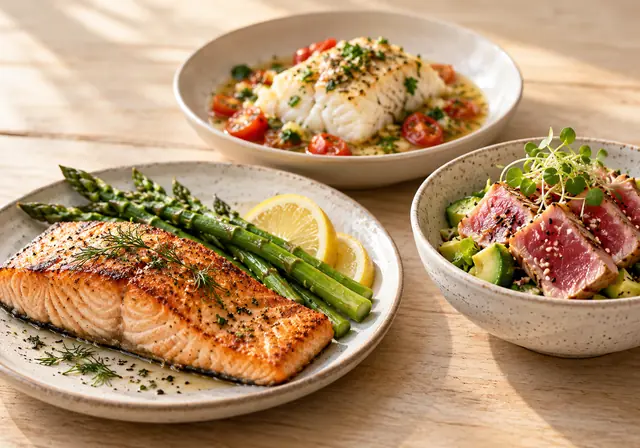
Fish dishes offer a wide range of seaside flavours, from mild fillets to fuller-flavoured fish and traditional specialities from many cuisines.
Light vegetables, potatoes, rice or a fresh salad all make good companions. Fish can feel at home at a weekday dinner or a special table.
Fish dishes range from delicate to robust
Fish cannot be described by one flavour. Many white-fleshed species are relatively mild, while some oilier fish have a fuller and more distinctive character. Acidity, herbs, spices and accompanying ingredients can make two dishes using the same type of fish feel quite different. A light lunch, a substantial family dinner and a festive seafood-inspired meal therefore invite different choices. Rather than searching for fish in the abstract, think about whether you want gentle flavours, a pronounced maritime taste or a balance of freshness and richness. The individual recipe will show which species and ingredients are actually involved.
Consider species, origin and clear labelling
A meaningful fish description identifies the species and, where relevant, its source. Wild-caught and farmed fish are not interchangeable labels, and the environmental implications of each depend on the specific fishery or farming practices. A broad sustainability claim does not establish the circumstances of a particular product. The ingredients also matter for anyone who needs to avoid fish because of an allergy. Sauces, stocks and other components can contain unexpected ingredients, so a category label is never a substitute for checking the full recipe. Clear, specific information supports more informed choices than vague promises.
Sides that work with different fish flavours
Fresh vegetables, potatoes, rice and salads can all make good partners for fish, although the result depends on the character of the main dish. A mild fish can remain the focus when served with uncomplicated accompaniments; a more assertively seasoned one may benefit from something understated. A bright, acidic element can offer a different impression from a creamy or earthy side. For a group, think beyond what matches the fish: some guests may not eat it at all, and an appealing alternative allows everyone to join the meal without changing the entire menu.
Which fish dish suits the occasion?
A weekday lunch may call for a lighter plate, while a dinner for guests might put greater emphasis on presentation and the range of accompaniments. Start with the level of flavour you want, then consider portions and the other foods on the table. People who rarely eat fish may prefer a milder choice; others enjoy more distinctive seafood flavours. Neither preference is universal. If you are selecting for someone with dietary requirements, the ingredients in the actual dish are decisive. Knowing the species is particularly useful because different fish are not nutritionally or culinarily identical.
Fish and shellfish are different categories
Fish and shellfish are often grouped together in everyday conversation, but they are different food groups and may raise different allergy concerns. Even among fish, fat content, texture and flavour vary widely. Advice on mercury exposure can also differ by species and by individual circumstances, including pregnancy, so general claims that every fish dish is equally suitable would be misleading. The category can help you discover maritime flavours, but it cannot replace accurate ingredient information or relevant health guidance. Read the specific recipe and product labels, and make choices that fit the people who will actually eat the meal.
There are no matching recipes here yet. Browse other categories to choose dishes or drinks.
Explore all recipes
ⓘ Ratings come exclusively from approved community contributions.