

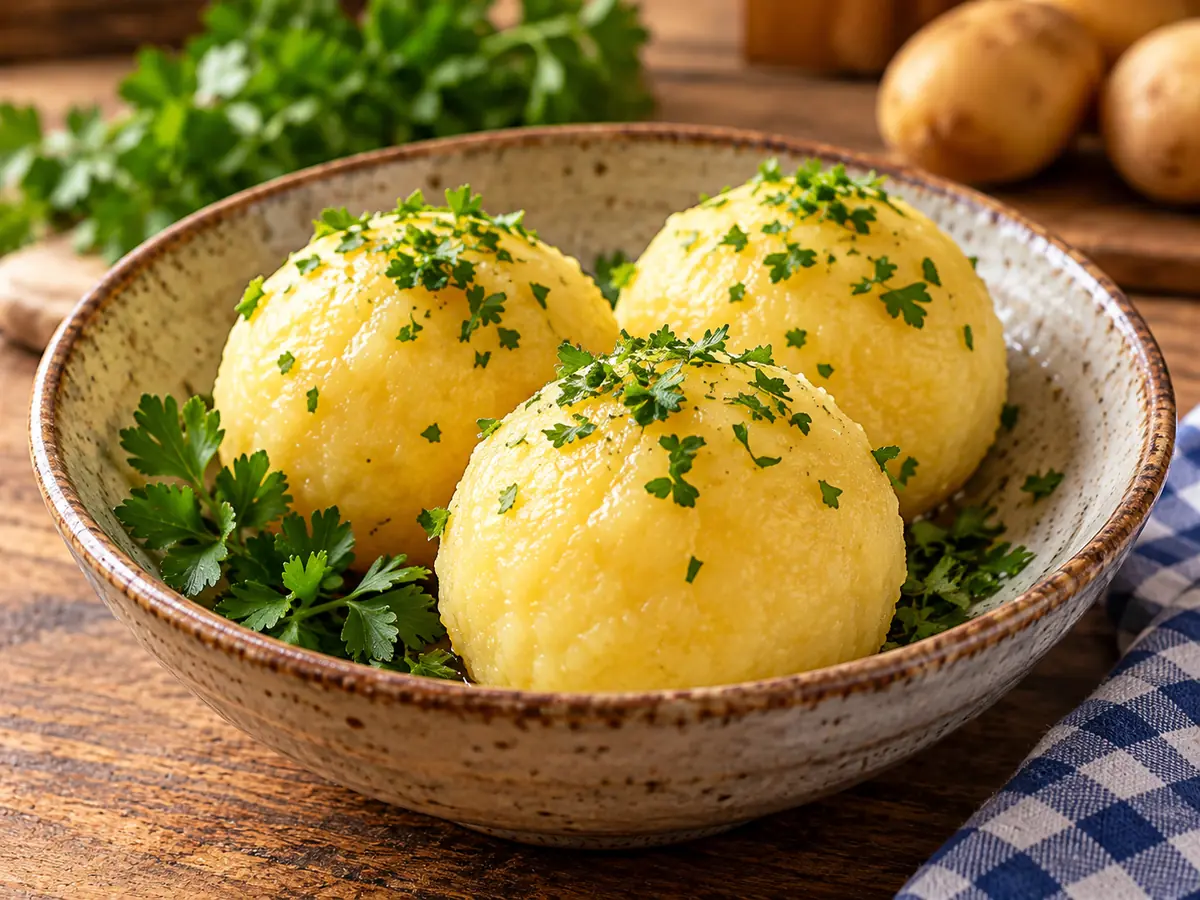
 AI-generated
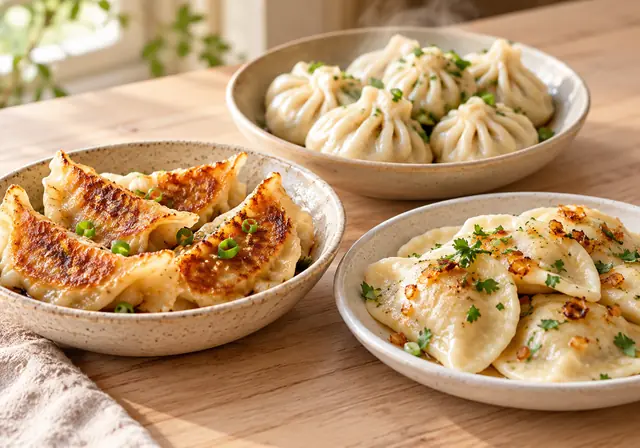 AI-generated
Dumplings
Dumplings are treasured partners to rich, savoury meals. Potato dumplings in particular belong to many traditional Sunday and holiday tables.
Dumplings pair beautifully with hearty savoury dishes and vegetarian mains. Different regional traditions give this family of comforting sides plenty of variety.
Dumplings and Klöße belong to a rich tradition
Knödel and Klöße are names associated with a broad family of dumpling-like foods, particularly in central European traditions. They can be soft, substantial and comforting, but the ingredients and texture vary by region. Some are based on potatoes, others on bread or different mixtures. Their place at the table is often alongside hearty mains and sauces, although local serving customs differ. When exploring the category, consider the kind of dumpling rather than assuming that every regional name indicates the same recipe. The diversity is part of the tradition, not an inconsistency to erase.
Regional names do not always match
A word used for a dumpling in one region may describe something different elsewhere. Local traditions influence the base ingredients, size, texture and role in a meal. Knödel and Klöße are therefore not perfectly interchangeable labels in every context, even though they overlap in everyday use. It is worth describing the particular style and its cultural setting without declaring one version universally authentic. For guests unfamiliar with these dishes, clarity about whether a dumpling is potato-based, bread-based or otherwise composed is more useful than a regional name alone.
Dumplings as partners for savoury meals
Many dumplings are served alongside strongly flavoured mains or sauces, where their mild and substantial character can create balance. Others have a more distinct taste or texture that deserves its own place in the meal. Consider how rich the main course is and whether additional sides are needed. A large dumpling accompaniment may already supply much of the meal's bulk, whereas a smaller serving can complement several dishes. The right choice depends on the overall table rather than the assumption that dumplings must always accompany one specific kind of meat.
Choose dumplings for your occasion
Start with texture and main ingredients. Do you want a soft potato-based style, a bread-oriented dumpling or something with a more pronounced character? Then consider portion size and what else will be served. For a festive meal, familiar regional food may carry particular meaning; for an everyday dinner, a lighter combination can also work. Dietary restrictions require detailed ingredient checks: many dumplings contain wheat, eggs, milk or other additions. A potato name does not by itself establish that a dumpling is gluten-free.
Avoid overgeneralising traditional names
Dumpling traditions are diverse even within German-speaking regions. Recipes associated with particular places may use different grains, potatoes, seasonings and accompaniments. It would be inaccurate to define the entire category through one familiar local version. A clear explanation of flavour, texture and composition respects those differences while helping new readers understand what to expect. Nor can the name indicate suitability for vegan, vegetarian or allergy-conscious eating; stocks, eggs or dairy may be present. The category should celebrate a family of foods without turning its regional variety into rigid rules.
Explore all recipes
ⓘ Ratings come exclusively from approved community contributions.