

 AI-generated
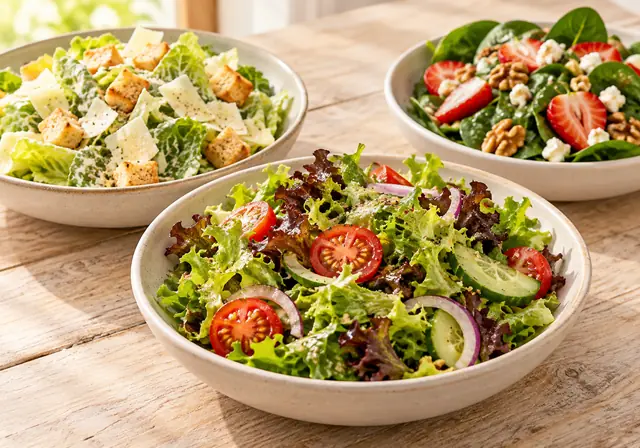 AI-generated
Spring
Spring food brings fresh colour to the table.
Salads, vegetable dishes and fruity desserts suit the first warmer days.
Spring meals reflect changing seasons
Spring often brings a shift in appetite toward fresher flavours and different seasonal ingredients, although the precise weather and growing season depend on location. In some regions, the first tender greens and vegetables become available; elsewhere the change is less pronounced. Spring food does not need to be uniformly light or cold. Warming soups and substantial mains may still be welcome on cool days. Explore the season through the balance of ingredients, textures and the occasions on which you plan to eat.
Fresh ingredients take different roles
Leafy vegetables, herbs and locally available spring produce can introduce colour and brightness into meals. Their flavour may stand out as the main element or add contrast to grains, pulses, fish and other foods. A salad can be a light accompaniment or a substantial lunch depending on its other ingredients. Avoid assuming every vegetable is in season everywhere at the same time. Local availability and quality are more useful guides than a fixed global list of supposedly essential spring produce.
Choose for changing daily routines
Spring gatherings can range from a weekend breakfast indoors to a picnic or early outdoor meal when weather allows. A family dinner on a cool evening may call for different foods from a mild afternoon outside. Consider portions, timing and how dishes will be shared. Bright, vegetable-focused options can sit alongside more comforting foods without contradiction. The season may inspire variety, but the right choice still depends on appetite and the people eating rather than an obligation to abandon familiar meals.
Spring celebrations vary by culture
Religious and secular occasions that occur during spring differ across countries and communities. Some are associated with specific foods or shared meals, while others simply provide an opportunity to gather. The calendar is also reversed between hemispheres, so a holiday treated as a spring occasion in one place may fall in another season elsewhere. Describe traditions with appropriate regional context. Seasonal ingredients can complement those occasions, but they should not replace attention to the tastes and dietary requirements of the actual guests.
Find the balance that suits your table
If you are in the mood for something fresh, explore vegetable-led dishes, herbs and gently acidic flavours. If the weather remains cold, a more substantial combination may be just as appropriate. A menu can combine both approaches through contrasts in texture and richness. Remember that seasonal labels do not establish vegan, gluten-free or allergen-safe suitability; check the complete ingredients when needed. The spring collection should offer inspiration grounded in food and circumstances, not rigid rules about what the season demands.
Explore all recipes
ⓘ Ratings come exclusively from approved community contributions.