

 AI-generated
 AI-generated
 AI-generated
Pastries
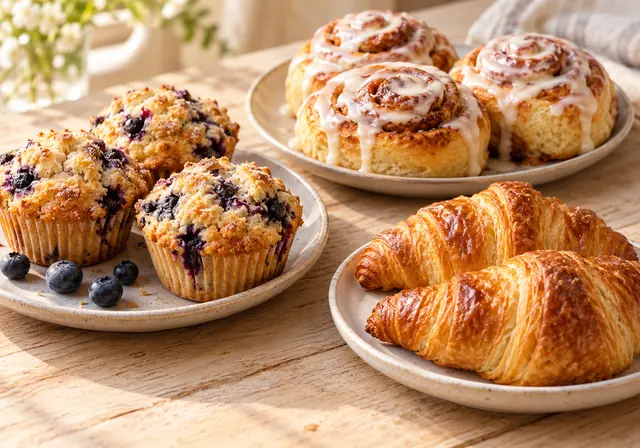
Pastries range from delicate sweet treats to satisfying savoury bakes. Filled pastries, small baked delights and regional specialities make the category especially varied.
Enjoy one for breakfast, on the go or with afternoon coffee. Pastries are made for many different moments of the day.
Pastries include many kinds of baked treat
Pastries cover a wide range of sweet and savoury baked foods, often presented in convenient individual portions. They may be flaky and layered, soft and airy, tender and crumbly or richer and more substantial. No single texture represents the entire category. This breadth makes pastries useful for breakfast, afternoon refreshments, small snacks and larger gatherings. When choosing, think about whether you want something sweet to accompany a drink, a savoury bite alongside other foods or a more pronounced treat. The texture and filling can matter as much as the overall flavour.
Sweet and savoury options have different roles
Sweet pastries pair naturally with coffee, tea and dessert spreads, while savoury choices may complement lunch or a buffet. Fruit, chocolate and spices create different sweet profiles; cheese, vegetables and herbs bring an entirely different character. You need not mix every possibility into one selection. For a brunch, having both sweet and savoury options may serve varied appetites, while a dessert-focused occasion invites other priorities. Ingredients remain important regardless of flavour: pastry may contain butter, eggs, wheat, nuts or dairy fillings even if those components are not obvious from the surface.
Pastries for families and guests
Individual baked portions can make serving a shared table straightforward, but different pastries vary widely in size and richness. For children or adults who prefer familiar flavours, a mild choice may be welcome; others may enjoy stronger spices, more pronounced savoury fillings or fruitier options. At a larger gathering, a selection of contrasting textures can create interest without excessive variety. Dietary labels must be checked carefully. A pastry that appears vegetable-based may still contain butter, cheese or eggs, and a small size does not imply that allergens are absent.
Choose pastries for the way they will be enjoyed
First decide whether the pastry will be a sweet finish, a savoury addition or a standalone snack. Then consider texture. A crisp layered pastry differs sharply from a soft yeast-raised one or a tender, crumbly bake. Filling and flavour can further narrow the choice. A rich pastry may need little accompaniment; a mild one can fit into a more varied meal. The occasion, portion count and preferences of guests help determine how many kinds are worth serving. Selecting deliberately is often more useful than simply assembling the largest possible assortment.
The dough contributes much of the character
Puff pastry, shortcrust and softer yeast-based doughs differ not only in shape but also in texture and how they combine with fillings. Crisp layers create a contrasting sensation to a soft crumb or a delicate, sandy bite. Fruit fillings give a different impression from savoury cheese or vegetable combinations. Regional traditions offer many approaches, and the same broad pastry name may encompass varied styles. When allergies matter, consider both dough and filling: wheat, milk products, eggs and nuts can occur in either. A clear description of the full pastry is more informative than its outward appearance.
Explore all recipes
ⓘ Ratings come exclusively from approved community contributions.