

No recipes match these filters yet.
Rice sides
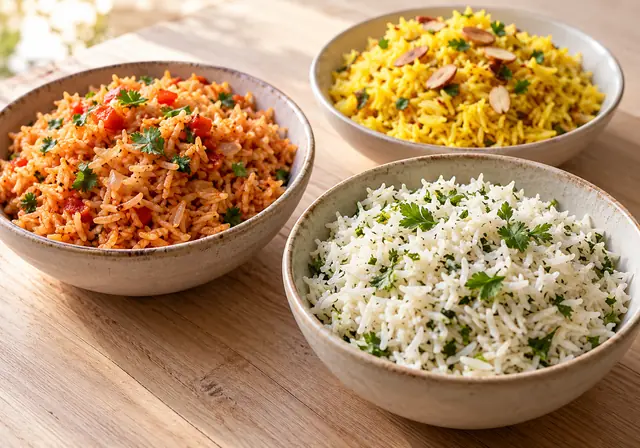
Rice sides are familiar companions to curry, vegetables, meat and fish. Plain rice and fragrant seasoned versions each bring something different to the plate.
Some rice sides let the main dish shine; others add herbs and spices of their own. Pick a flavour that suits the meal.
Rice can support many different meals
Rice is a common accompaniment in diverse food cultures, but its role on the plate changes with the main dish. Sometimes it provides a neutral base that allows aromatic sauces and vegetables to stand out. In other settings, rice has a more pronounced flavour or texture and contributes its own identity. It may complement meat, fish, vegetables or pulses without becoming the centre of the meal. When browsing rice sides, think about whether you want a mild background or a distinctly fragrant accompaniment. That choice can change how the whole meal is experienced.
Rice varieties influence aroma and texture
Different rice varieties produce different textures, from separate grains to a softer, more cohesive result. Some have a recognisable aroma; others are valued for their mild flavour. These qualities help determine which main dishes they complement. A delicate sauce may suit a restrained rice side, while a strongly seasoned dish can work with a different texture or fragrance. It is more useful to compare actual grain characteristics than to assume every bowl of rice has the same role. The ingredient list also clarifies whether additional fats, spices or sauces have altered the otherwise simple base.
Combine rice with main dishes thoughtfully
Rice can make a plate feel more complete without adding competing flavours. Consider the seasoning and texture of the main course, as well as other sides already being served. A heavily flavoured accompaniment may be unnecessary when the main dish is already complex. By contrast, a modest vegetable main can benefit from rice that contributes more character. Regional traditions offer many valid combinations, and no single grain variety is the universal partner for every cuisine. A rice side works best when it complements rather than duplicates the rest of the meal.
When is rice the right accompaniment?
Rice can be a suitable side for a shared family dinner, a small lunch or a multi-course menu. Consider whether the main dish already contains another grain or starchy component before adding it. Portion size and the number of diners influence how much of the meal it should occupy. For dietary requirements, check all additions: plain rice is naturally free of gluten, but sauces, seasonings and cross-contact can change whether a finished dish is appropriate for someone with coeliac disease. Always evaluate the actual composition, not simply the word rice.
Rice traditions should not be flattened
Long-grain, short-grain and other rice types have different culinary associations and textures. Their uses vary within regions as well as between countries, so descriptions such as Asian rice say little about the actual dish. The surrounding foods and local customs matter as much as the grain. A rice accompaniment should be understood within its meal rather than presented as one universal staple. When selecting, be guided by aroma, texture and the flavours of the main course. Specific descriptions respect different food traditions while helping people choose a side that suits their table.
There are no matching recipes here yet. Browse other categories to choose dishes or drinks.
Explore all recipes
ⓘ Ratings come exclusively from approved community contributions.