

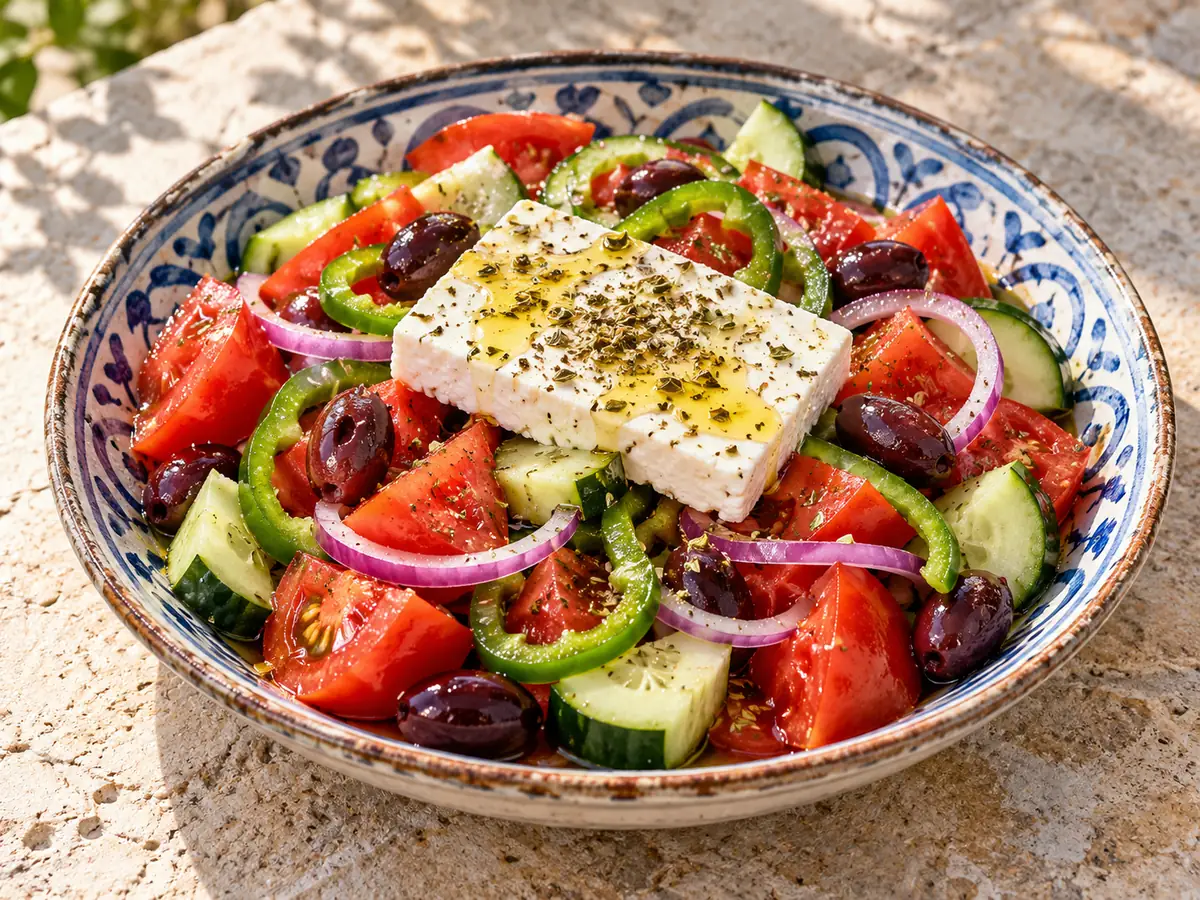
 AI-generated
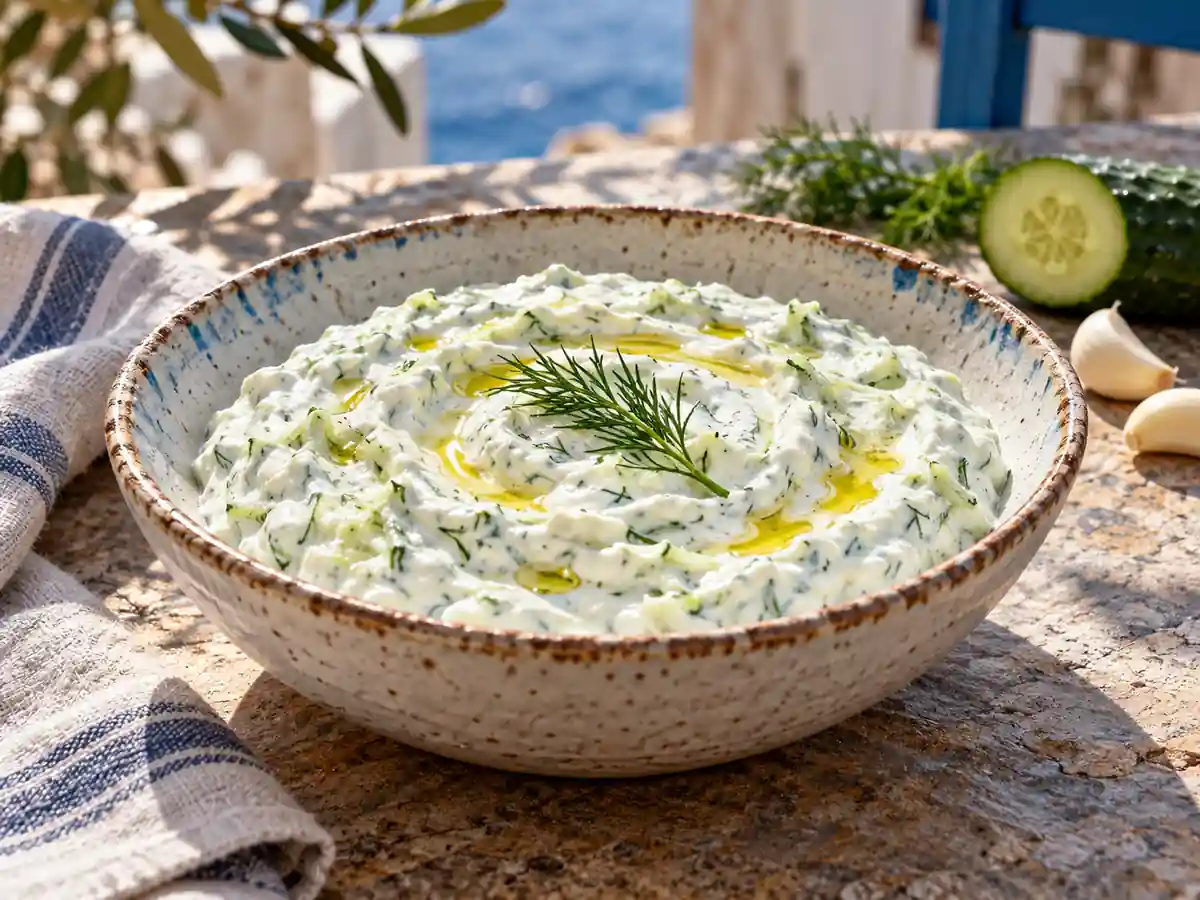
Greek
Greek cooking evokes olive oil, herbs, vegetables, grilled dishes and small starters.
Many favourites are made to be enjoyed together.
Greek food varies from islands to mainland
Greek cooking encompasses island and mainland traditions shaped by geography, regional agriculture and local food customs. Olive oil, vegetables, herbs, grains, dairy and seafood may have different roles depending on the area. A single stereotype of grilled food and salad does not capture that breadth. Some meals emphasise fresh vegetable flavours, others are more substantial or suited to celebrations. When exploring the category, think about the regional context and the desired meal rather than expecting every Greek dish to fit one fixed Mediterranean image.
Vegetables, herbs and olive oil
Vegetables and herbs are important across many Greek food traditions, though the exact combinations vary by region and season. Olive oil can contribute a distinct flavour, while dairy and grains create different textures and roles within a meal. These foods can be fresh and mild or deeply savoury. Not every Greek dish is automatically vegetarian or free from dairy, and herbs alone do not establish dietary suitability. The actual ingredients are more informative than a broad regional label. Exploring them reveals a cuisine with greater variety than one familiar salad or appetizer can suggest.
Seafood and inland food cultures
Coastal and island settings may highlight fish and other seafood, but inland regions have their own traditions involving grains, vegetables, dairy and different savoury foods. It would be misleading to claim that the same ingredients dominate everywhere. These contrasts reflect local landscapes, social habits and changing availability. When comparing Greek food, consider whether you want a maritime flavour, something vegetable-forward or a more substantial rural-style meal. Accurate regional information creates better culinary context than an assumption that every Greek plate comes from the same seaside setting.
Shared meals and hospitality
Eating together is important in many Greek social traditions, with small dishes and larger courses taking different roles depending on the occasion. Still, family customs and regional practices vary. A selection for guests can combine different textures and flavours without requiring every dish to be served at once. Consider whether the meal is a light lunch or a festive gathering. For dietary restrictions, sauces, cheeses, breads and seafood ingredients must be checked individually. A welcoming table is built around the needs of the people eating rather than a rigid image of a traditional feast.
Choose a Greek flavour direction
Start with the combination you enjoy: fresh vegetables and herbs, savoury dairy notes, seafood flavours or heartier grain-based food. Think about whether the dish is a starter, side or main course. The distinction matters when assembling a full menu. Regional traditions can suggest combinations without dictating one authentic plate for everyone. If serving guests, verify the individual ingredients, particularly dairy, wheat and seafood. The category can help readers find a suitable meal while appreciating Greek food beyond the few dishes most widely known abroad.
Greek and Mediterranean are not identical
Greek food is part of a wider Mediterranean culinary landscape, but the region includes many countries and food cultures with their own histories. The label Mediterranean should not be treated as another word for Greek, nor should Greek dishes be assumed to represent every coastal culture. Specific ingredients and regional contexts clarify the differences. Olive oil, vegetables and herbs may appear across the region while still being used in distinct ways. Describing those overlaps and distinctions is more accurate than flattening diverse traditions into a single imagined Mediterranean diet.
Explore all recipes
ⓘ Ratings come exclusively from approved community contributions.