

No recipes match these filters yet.
Protein shakes
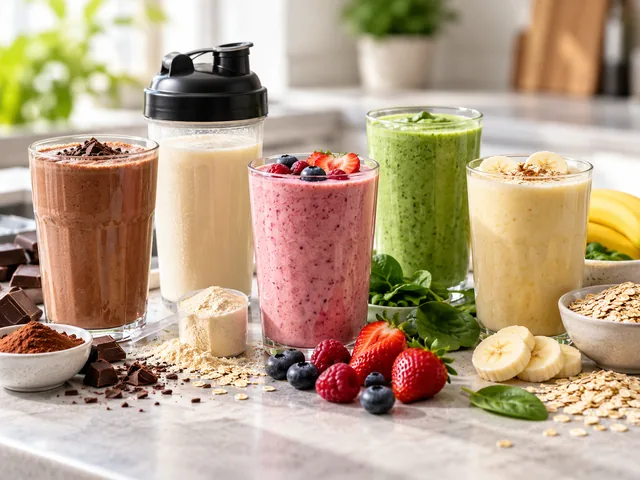
Homemade protein shakes can be fruity, chocolatey, creamy or refreshing.
Milk, skyr, yogurt and plant-based alternatives produce different textures, while fruit and oats change the flavour and thickness. The actual ingredient quantities, rather than the name of the shake, determine its protein content.
Choosing ingredients for a protein shake
Milk and yogurt give a shake a familiar creamy base, while soy drinks and silken tofu offer plant-based alternatives. Banana adds sweetness and body, berries lend a fresher flavour, and unsweetened cocoa creates a chocolate note. Oats thicken the drink as they absorb liquid, so a shake may become noticeably thicker after resting. The role of an ingredient matters: fruit primarily changes taste, whereas skyr and some soy products may contribute a larger share of the protein. Start with the flavour and texture you want, then choose a combination that also fits the actual nutritional content you are aiming for.
Making shakes with or without protein powder
Protein powder is optional rather than essential. Dairy products and certain soy foods can provide meaningful amounts of protein in a homemade blend. Whey protein comes from milk; plant formulations may contain pea, soy or mixed sources. Products often include flavourings, sweeteners or thickeners, all of which affect the finished drink. Replacing powder with yogurt or tofu is not a simple one-for-one exchange because their moisture and texture differ. Anyone who needs to avoid dairy, soy or particular allergens should check the specific product ingredients and possible cross-contact rather than trusting the general protein-shake label.
Fruity and chocolate flavour combinations
Frozen berries, mango or banana make shakes cold and often increase thickness without the need for much ice. Banana pairs with cocoa, while berries brighten a plain yogurt base. Add the liquid to the blender first, followed by softer ingredients and frozen fruit in smaller amounts. If a shake becomes too thick, introduce more liquid gradually rather than immediately adding sugar. Oats continue absorbing moisture after blending, so a drink made ahead may need another stir or splash of milk. Nut butter can provide a richer flavour but also changes the recipe's energy balance, which is relevant when comparing different versions.
Understanding protein content per serving
Two drinks that look alike can supply very different amounts of protein. Calculate the contribution of the actual ingredients and divide it by the number of servings, rather than assuming a value from the recipe name. Packaging commonly lists nutrition per 100 grams or 100 millilitres, so convert each figure to the quantity used. A high-protein nutrition claim under the relevant EU rules depends on the proportion of total energy supplied by protein: at least 20 percent. Simply containing a certain number of grams does not prove the claim. Changes in powders, base drinks or added fats can change that ratio significantly.
Storage and special dietary needs
Freshly blended shakes usually have the most predictable texture. Refrigerate drinks containing perishable dairy or other sensitive ingredients promptly, use clean equipment and avoid leaving prepared shakes warm for extended periods. Fruit may darken, ingredients can separate and oats will continue thickening the mixture, so stir before serving if necessary. A vegan or dairy-free version still requires checking every ingredient, including powders and flavourings. Plant-based drinks can contain soy or nuts, and an oat product is not automatically gluten-free. For allergies or medically required dietary restrictions, assess the complete ingredient list separately.
There are no matching recipes here yet. Browse other categories to choose dishes or drinks.
Explore all recipes
ⓘ Ratings come exclusively from approved community contributions.